Commodities
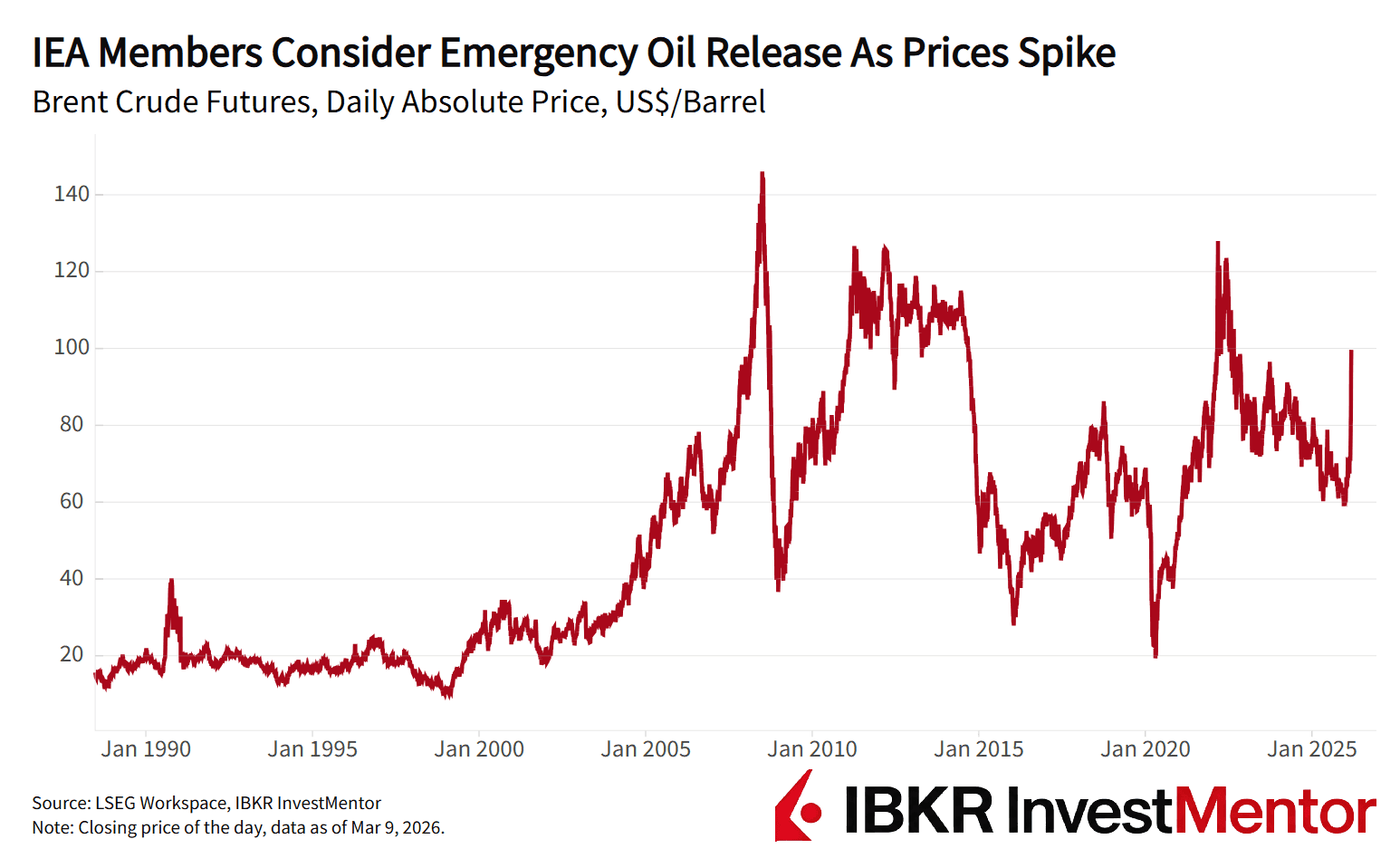
Oil Above $100
Oil Shock 2026: Iran War and the Global Economy
3/9/20263/9/2026
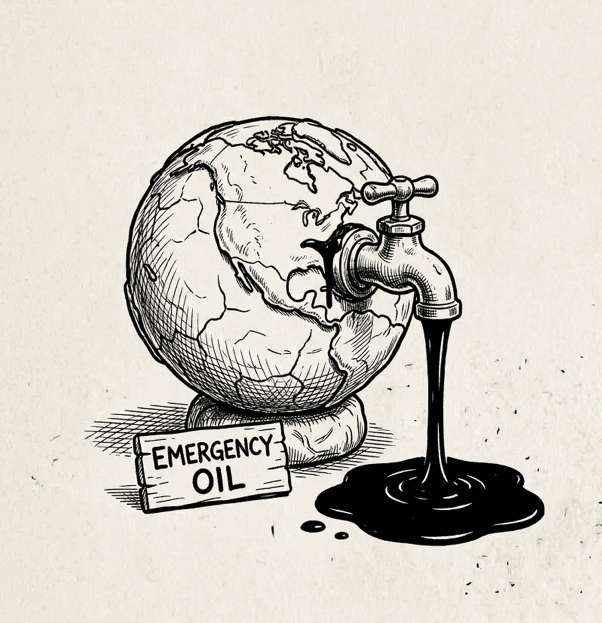
The International Energy Agency members have agreed to release 400 million barrels of oil from their strategic reserves. This is the largest-ever move in history — but only a temporary relief, and the pace of the release matters. The disruption from the Iran war is causing about a 20-million-barrel hole in global supply every day.
The 32 IEA member countries currently hold 1.2 billion barrels of public stocks and another 600 million in industry stocks, a safety net for the global energy markets.
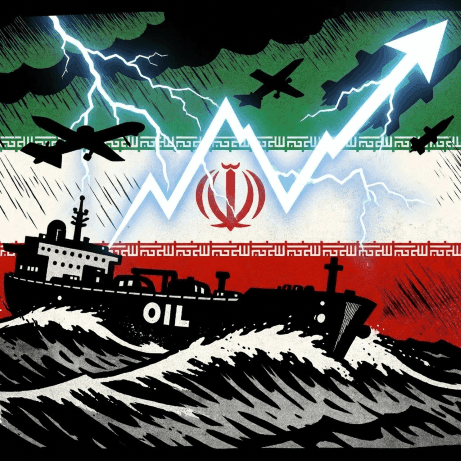
The International Energy Agency head, Fatih Birol, called the disruptions in the oil market “unprecedented in scale.” The Strait of Hormuz, a critical shipping chokepoint, remains blocked by Iran, with mines now laid on the route and ships hit by projectiles.
Emergency oil reserves were created in 1974 after the Arab oil embargo, when oil shortages paralyzed economies and triggered a 400% spike in oil prices.
The IEA was set up to ensure member countries keep enough crude in storage for any future oil shocks. Each member is required to hold at least 90 days of net imports.
These are stored in underground caverns, coastal tanks, or industry‑held stocks. They come in handy when wars, natural disasters, refinery outages, or shipping disruptions threaten supply. Emergency stocks are a buffer that buys time, but they cannot replace production in the long term.
Releases are meant to calm markets, not flood them. Governments can sell crude directly, lend it to refiners, or coordinate joint action through the IEA.
National‑only releases: Countries like the US have also tapped reserves independently during refinery outages or domestic supply disruptions.
Emergency systems vary based on import needs and location.
Want to explore more? Download our free app to unlock expert news updates and interactive lessons about the financial world.