
Pump Pressure
Fuel Fires Up US Inflation
6/10/2026
6/11/2026
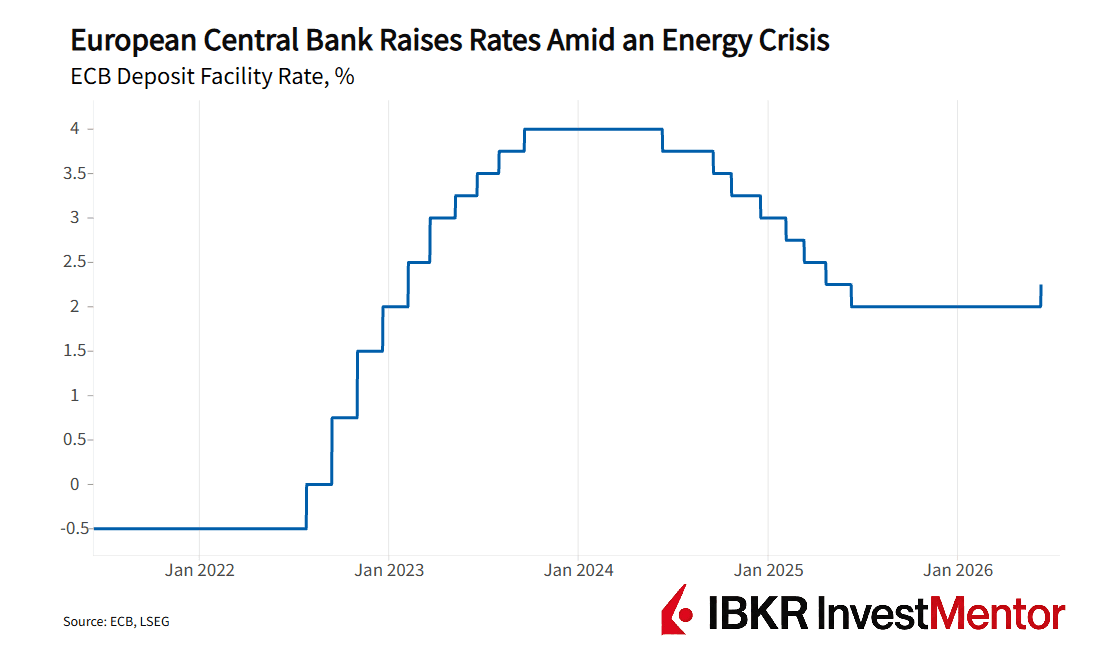
The European Central Bank has raised interest rates by 25 basis points, taking its deposit rate to 2.25%. It's the first major central bank to tighten policy in response to the Iran war. It’s also the first time the ECB has increased its benchmark rate since 2023.
ECB President Christine Lagarde said the decision was unanimous and “without reservation.” Investors follow the central bank’s unity closely, as internal splits may signal uncertainty on the policy direction. This time, the message was crystal-clear: the ECB is willing to step up decisively to curb inflation.
The central bank lifted its average inflation forecast for 2026 to 3%, expecting Eurozone growth to slow down to 0.8%.
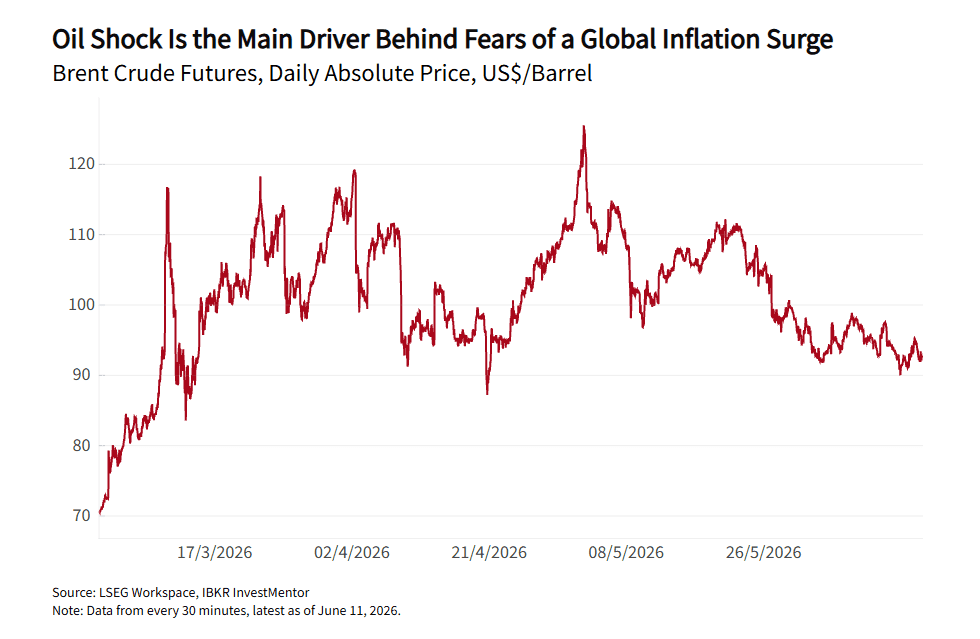
The Strait of Hormuz between Iran and Oman is one of the world’s key energy chokepoints, with around 20% of the world’s oil and liquefied natural gas normally flowing through this narrow passage. It has been largely shut since the start of the war in late February.
Disruption there also hits fertilizers, chemicals needed in mining and plastics, and helium — a key element in chip manufacturing. Shipping and insurance costs have shot up, too.
This is why the ECB is warning of a broad-scale inflation, pushing up food, goods, and services, not just fuel.
ECB officials spent weeks preparing markets for this move. More than 90% of economists in a Reuters poll expected a June hike, and ECB board member Isabel Schnabel said in May that “looking through” the shock was no longer a good option.
That’s central bank forward guidance in action: officials signal their thinking ahead of time so markets are not blindsided. The ECB still says policy is decided meeting by meeting, but the messaging was so strong that investors had already priced this in.
Meanwhile, in the US, new Fed chair Kevin Warsh has said he does not believe in forward guidance and wants to scale it back.
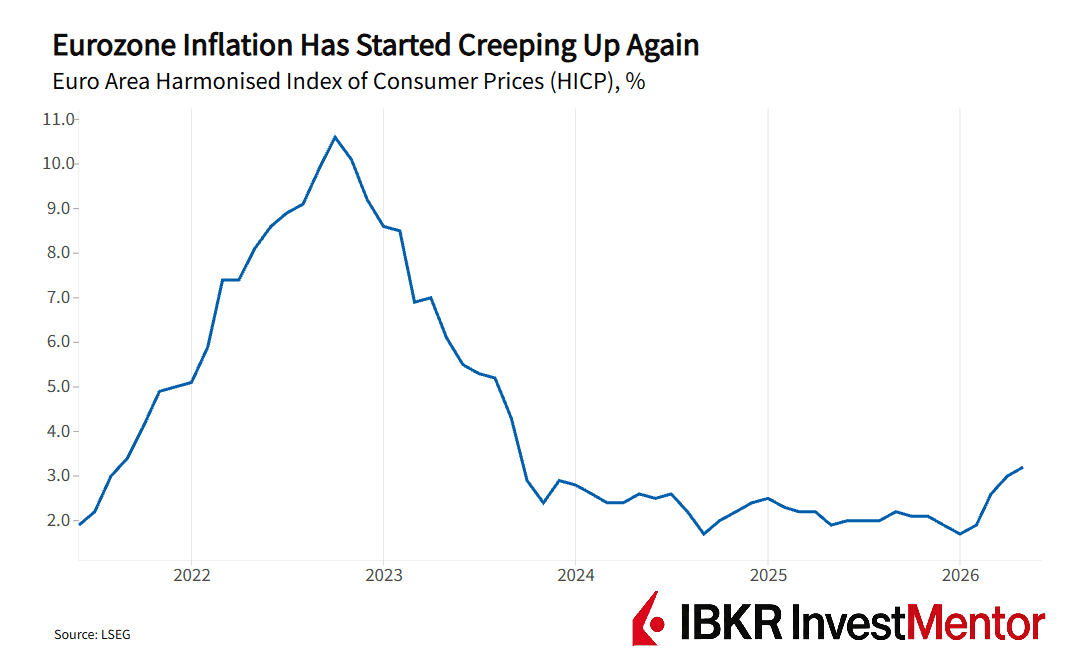
Part of today’s hike is about the ECB’s own recent history. In the post-pandemic inflation surge a few years ago, central banks were widely criticized for reacting too slowly. Lagarde was leading the ECB already back then.
The supply chain disruption proved long-lasting, and the 2022 energy shock, following Russia’s invasion of Ukraine, sent prices racing.
This is why some economists see the ECB’s latest move as an “insurance hike” designed to protect the central bank’s credibility after that earlier misread. Critics say this risks repeating a different mistake by undercutting fragile growth with a hasty rate increase.
The ECB may not stay alone for long, but some of the other major central banks look less eager.