Markets
SpaceX Blast-Off
The World’s Largest IPO Makes Elon Musk the First Trillionaire
6/12/2026
6/18/2026

After more than 100 days of war, the US and Iran have signed a deal to halt fighting. Crucially, this memorandum of understanding includes the reopening of the Strait of Hormuz, the world’s most important energy shipping route.
“Ships of the world, start your engines. Let the oil flow!” US President Donald Trump wrote on social media.
The US and Iran were originally scheduled to sign the deal in Switzerland, but the ceremony was cancelled after the parties decided to sign remotely on Wednesday instead. Three Saudi-flagged tankers passed the Strait of Hormuz just hours after. But it will likely take weeks for the route to return to normal as shippers want to ensure the strait is clear of mines.
The agreement is a framework for a 60-day truce, not a finished peace treaty. It includes a ceasefire across all fronts, including Lebanon — although Israel has launched new airstrikes after the signing.
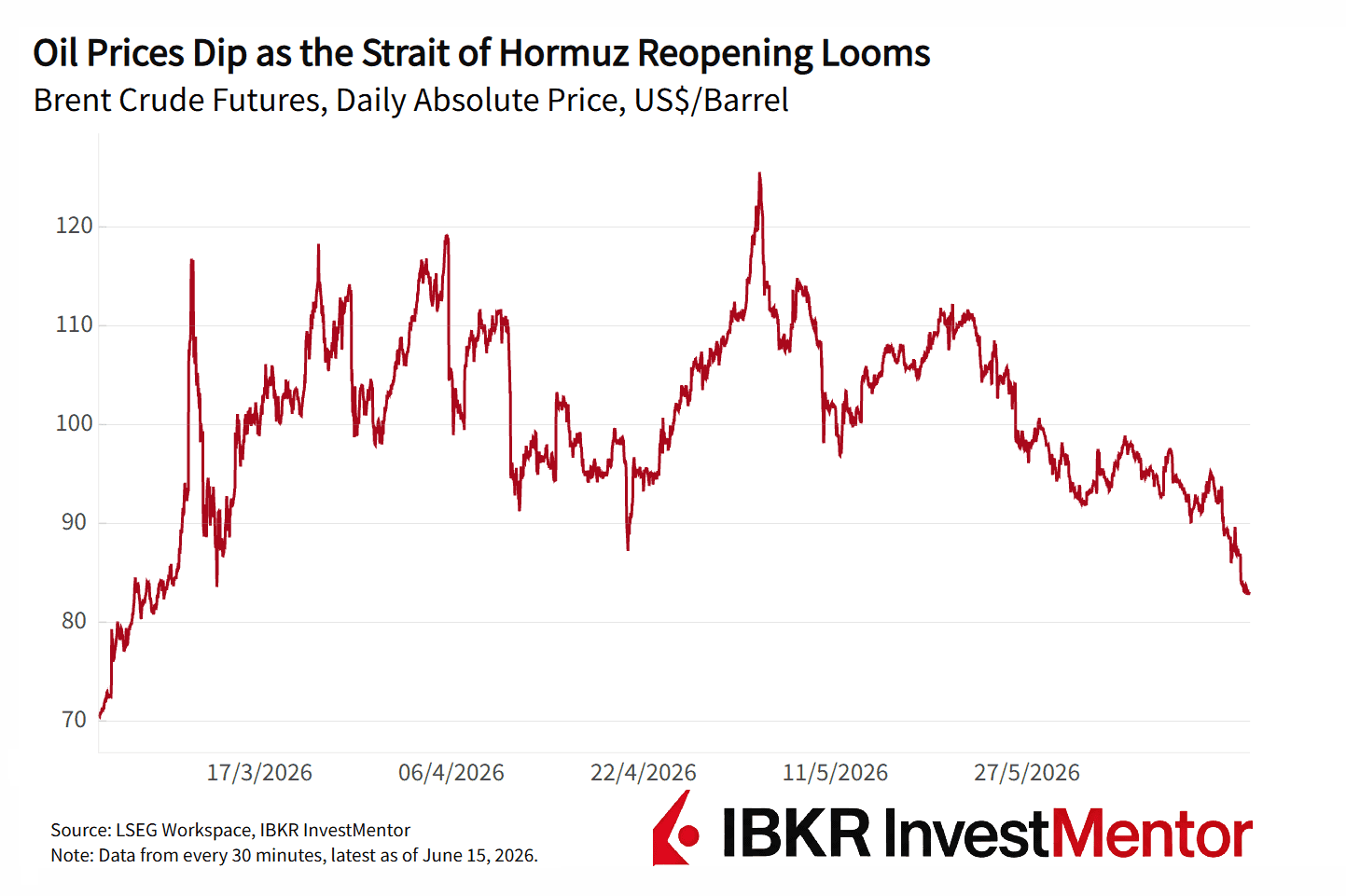
Stocks jumped and oil prices fell when the news of the deal broke. The conflict pushed crude oil benchmark Brent as high as $126 per barrel, triggering what the International Energy Agency has called “the biggest energy crisis in history.”
Investors are pricing in steadier growth with less inflation pressure and a lower likelihood of interest rate hikes by major central banks.
The Strait of Hormuz is one of the world’s most important energy routes, with 20% of the world’s oil and liquefied natural gas exports moving through it before the war. Iran has effectively closed it since late February — as the fear of mines, drone and missile attacks, and armed speed boats has kept most vessels from attempting a crossing.
Tankers returning to the route means more physical supply reaching markets. Even though it will take time for traffic to normalize, the markets react to expectations.
Once sanctions are lifted, Iran will be able to resume oil exports, bringing a top-10 producer back into global markets.
The framework agreement cheered up markets globally, but the US and Iran still have thorny issues to tackle.
In the US, the deal lands ahead of the November midterm elections, with fuel prices a key issue to voters.