
Consumers
Football Economy
The World Cup Is Football’s Big Money Machine
6/8/2026
6/12/2026
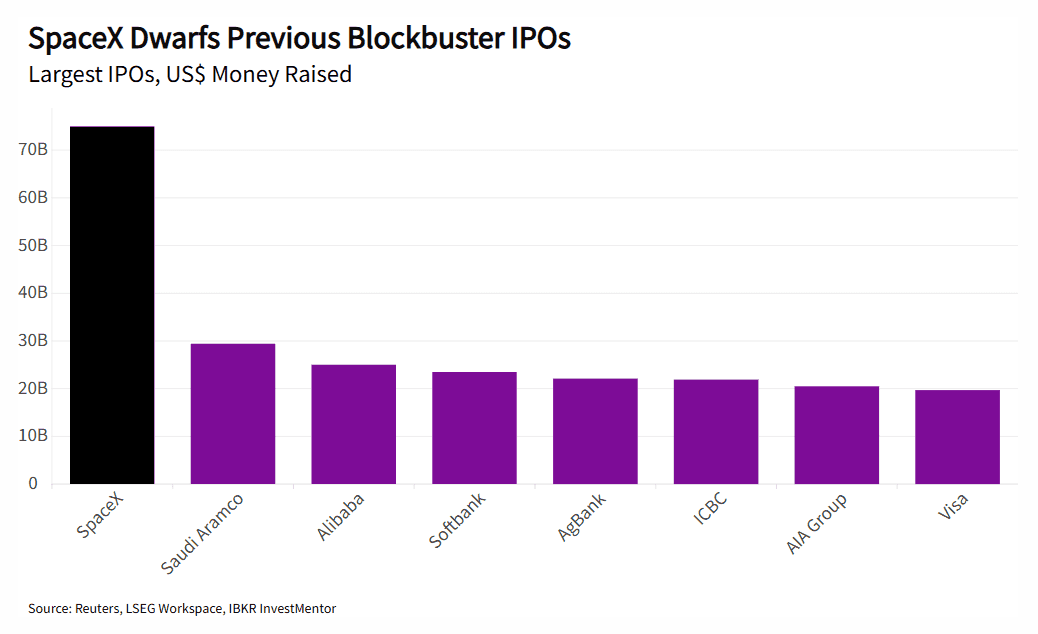
Elon Musk’s telecom-AI-rocket company, SpaceX, has successfully gone public, selling its shares at $135 a piece for a $1.77 trillion valuation. This is the first time a newcomer has entered the lists at a valuation exceeding one trillion dollars.
The American juggernaut raised $75 billion, crushing Saudi Aramco’s previous record for the biggest initial public offering (IPO). The company debuted on Nasdaq under the SPCX ticker on Friday, with shares popping 13% during the first minutes of trading. The market cap shot above $2 trillion.
This IPO also establishes Elon Musk as the world's first trillionaire.
While Musk and SpaceX grab the headlines today, this IPO is also a stress test for the AI boom. Anthropic and OpenAI have both filed to list their shares on the US stock market.
Both are likely eyeing valuations past the one-trillion-dollar threshold. If SpaceX trades reasonably well in the coming weeks and months, Wall Street gets a green light for more blockbuster debuts.
The enthusiasm ahead of the market debut was evident, as overall orders for SpaceX shares were oversubscribed, exceeding three times the amount on offer.
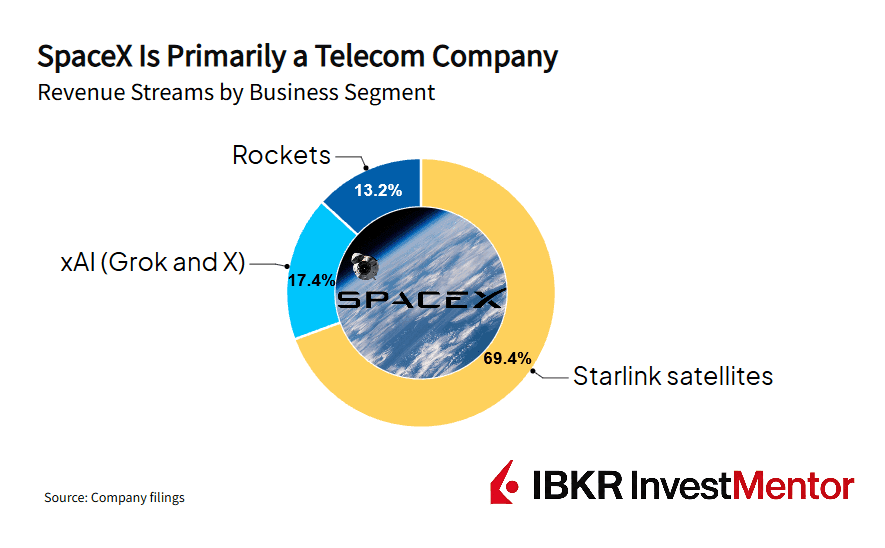
SpaceX lost nearly $5 billion last year. Satellite network business Starlink is the only profitable unit of SpaceX and accounts for the largest share of its revenue.
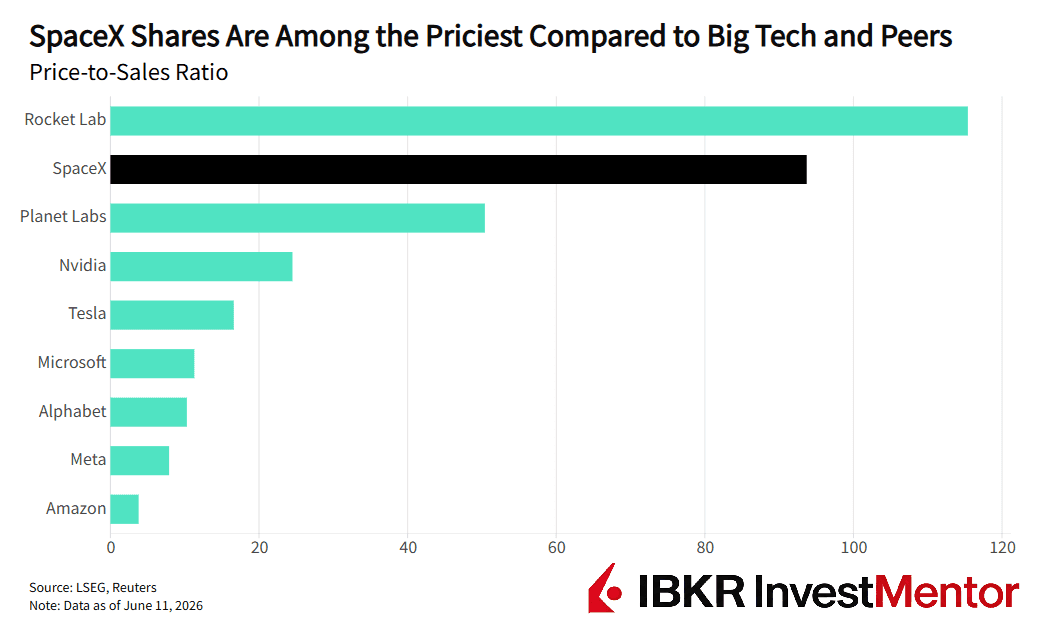
As price-to-earnings ratio can’t be used for loss-making companies, price-to-sales is the most telling metric. It compares a company’s market value with its annual revenue. SpaceX went public at roughly 92 times its last 12 months of revenue. Financial services firm Morningstar values the business closer to $780 billion, less than half the IPO valuation.
Believers argue it’s all about Musk’s moonshot vision: self-sustainable cities on Mars, transformative AI technology, and data centers in orbit. Investors are buying a big “what if.”
SpaceX gave retail investors unusually large access. Ordinary people were able to buy shares via their online brokers. Individual investors placed orders for more than $100 billion and were expected to get 20% of the shares sold, according to CNBC.
Musk has long favored small shareholders owning stakes in his companies, with retail investors accounting for about 40% of Tesla’s shares. As the richest person on the planet, he’s built a loyal following on his own social media platform X (formerly Twitter).
The risk here is valuation detachment. When much of the valuation is driven by narrative and fandom, SpaceX is exposed to big swings if the sentiment shifts.
People who never buy a single share of SpaceX will end up owning it. Nasdaq changed its rules so giant new listings like SpaceX can enter the Nasdaq-100 after 15 trading days, and FTSE Russell adopted an even quicker route for some of its indices.
Index funds and exchange-traded funds that track those benchmarks must buy the stock once it joins. This means there will be huge index-fund-driven demand for SpaceX. This was a partial driver behind why other space stocks fell on the IPO day. SpaceX stands to pull in much of the limited capital in the sector.
The most-tracked US stock index, S&P 500, said no to fast-tracking: SpaceX has to wait 12 months and meet the index’s profitability test.