
Media
France Erupts🎥
10/20/2026
10/21/2026

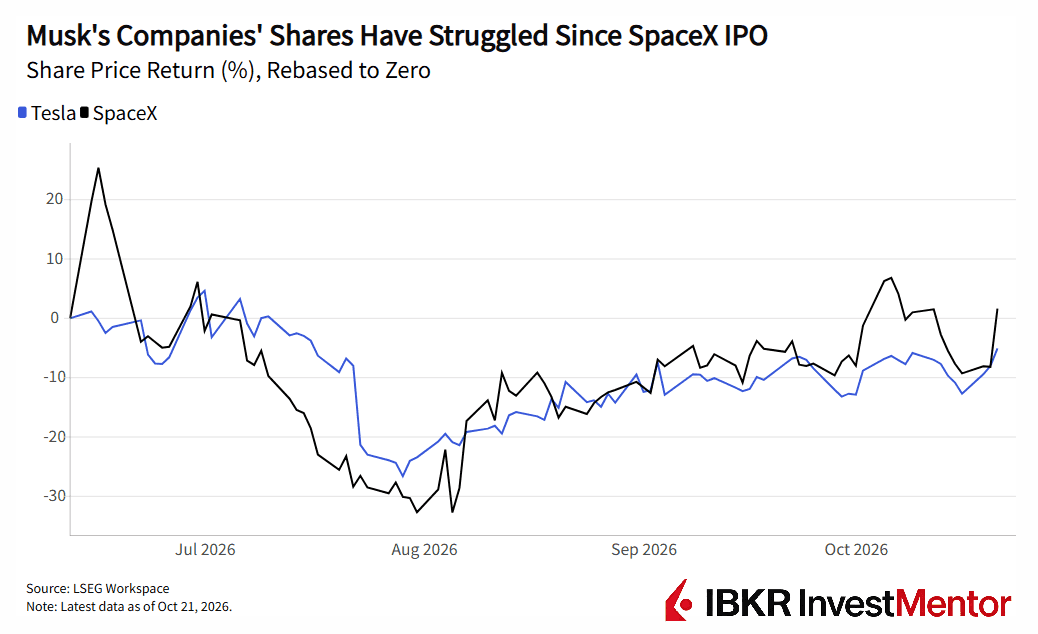
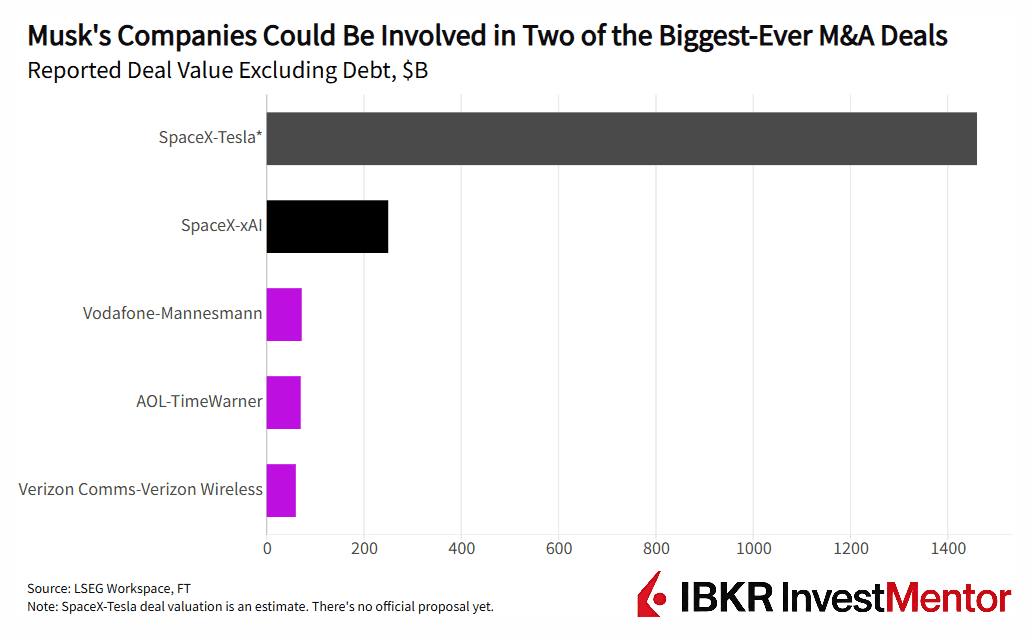
SpaceX’s blockbuster quarter was upstaged by CEO Elon Musk’s other announcement: SpaceX and Tesla have formed independent board committees to explore a merger. This has been speculated for a while, with talks intensifying after the rocket and satellite company bought another one of Musk’s companies, xAI, earlier this year for $250 billion.
Musk called the combination “a good idea,” but stressed that no terms have been agreed. He described himself a “conflicted party” who would not be involved in the talks. But as the holder of 84% of voting rights at SpaceX and 20% at Tesla, he is the driving figure behind the potential deal.
The merged conglomerate could be worth roughly $3.5 trillion, pushing it into the top 5 most valuable companies in the world — overtaking Amazon. SpaceX’s xAI merger was the biggest on record. This one would eclipse it.
Tesla makes electric vehicles and batteries. SpaceX launches rockets, runs the satellite system Starlink, develops AI, and rents computing power to other AI companies. Musk thinks their projects overlap.
The companies already trade technology and money and share a CEO. SpaceX has bought nearly $1 billion of Tesla Megapacks and Cybertrucks. SpaceX thrusters were used in Tesla’s new Roadster car. Merger could also concentrate far more power in Musk’s hands.
Independent committees at Tesla and SpaceX must decide:
If the committees agree, shareholders vote on the deal. According to Musk, Tesla needs approval from a majority of all shares, not just those voted. An ignored ballot effectively becomes a “no,” making approval more difficult.
Competition authorities in the US, UK, European Union, and China would then examine the deal. China could prove especially difficult: Tesla operates its largest car factory there, while Beijing views SpaceX’s US defense work and Starlink network with suspicion.
SpaceX is famous for its rockets but that’s more like a side project. Its biggest business is now artificial intelligence, which overtook Starlink’s satellite internet in Q3.
Overall revenue jumped 161% to $14.6 billion, while the company swung from a one-billion-dollar loss to a $4.4 billion net profit. The AI division generated $7.6 billion of revenue, up from just $813 million a year earlier. Starlink produced $5.3 billion, meaning SpaceX is still big in telecommunications, too.
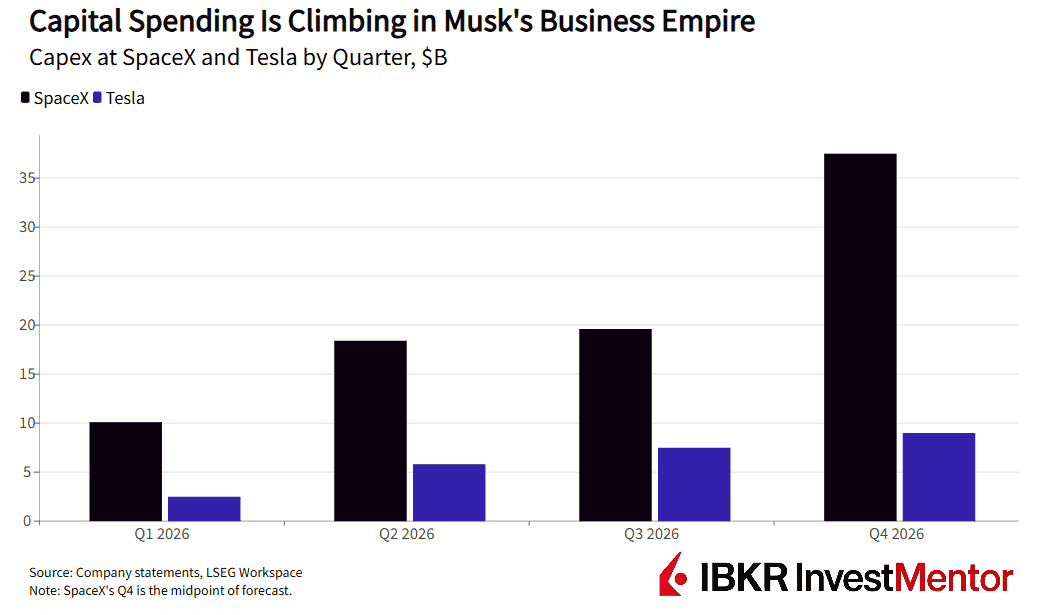
SpaceX rents computing capacity to customers including Anthropic and Google. But that growth comes with a fearsome bill: capital spending nearly tripled to $19.6 billion, and $35-$40 billion is set to be spent in the fourth quarter.