
Companies
Shein on Sale
Shein Falls Out of Fashion Before Its Long-Overdue Listing
8/17/20268/18/2026

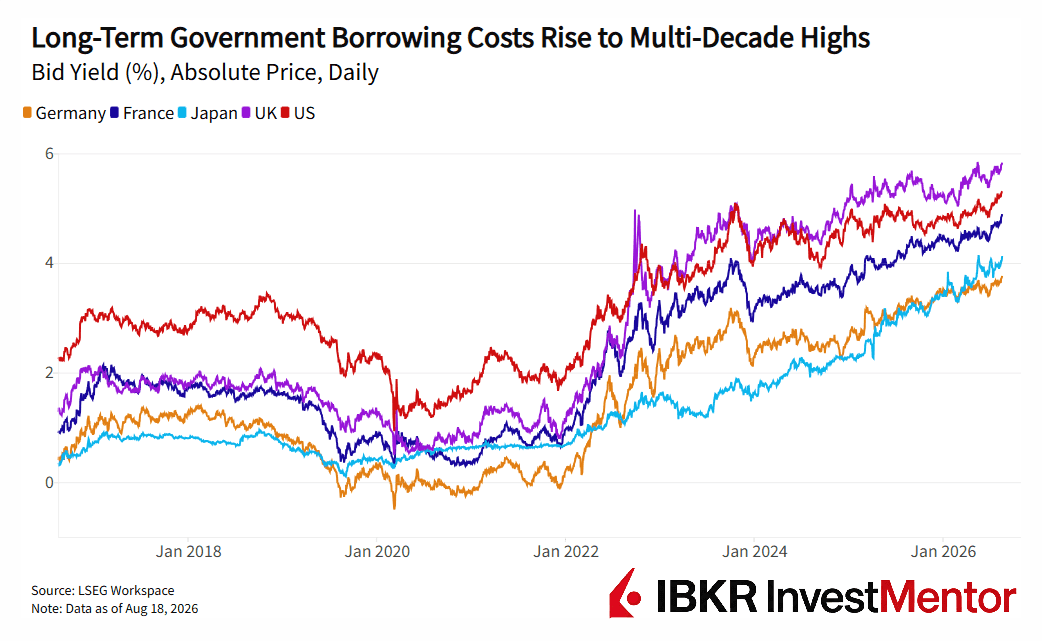
Long-term borrowing costs keep inching up for major economies, with bond yields hitting loftiest levels in decades on Tuesday.
The daily moves weren't dramatic — bond yields rose about 3 to 9 basis points. One basis point equals one-hundredth of a percentage point. That’s a moderate move in the slow-paced government bond market of wealthy economies. But the trajectory has been up for a while now.
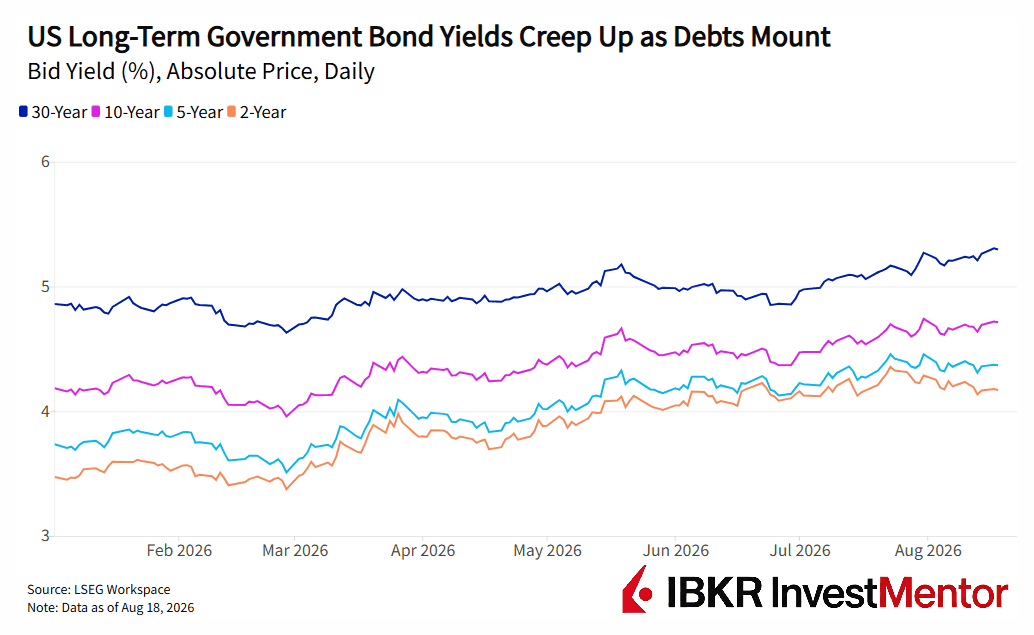
When investors dump government bonds, the prices fall and yields rise. Those yields serve as reference points for mortgages, business loans, and other debt in the economy.
A 30-year bond promises fixed payments for three decades. That becomes a rotten deal if inflation eats returns, governments issue mountains of new debt, or better investment opportunities appear. This is why long-term bonds are under pressure. Four forces are hitting at once:
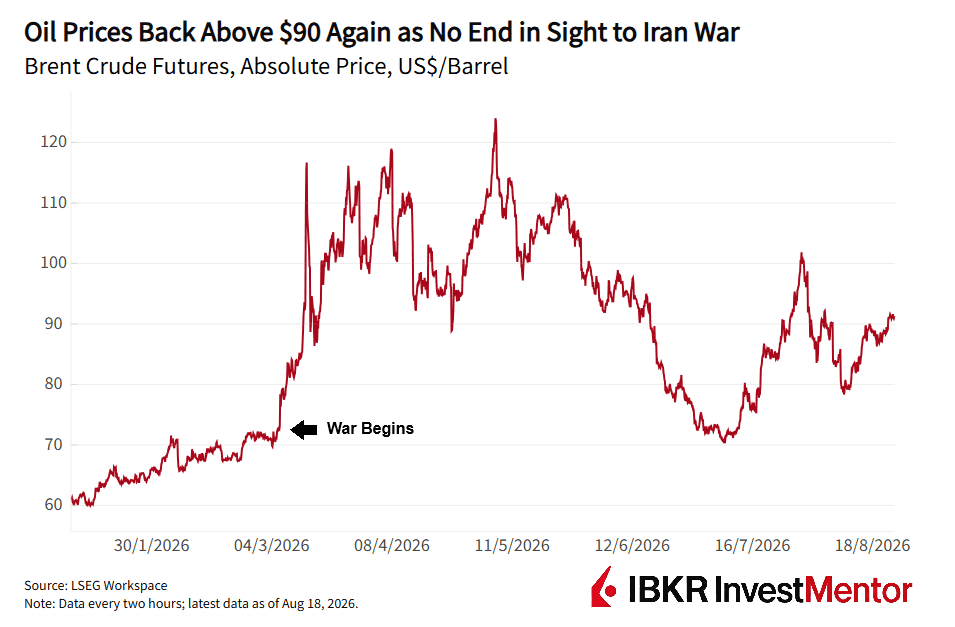
Global oil benchmark Brent crude climbed back above $90 a barrel as hopes of ending the US-Iran conflict have largely faded. Before the war started in February, oil was trading just a little above $70 per barrel.
While stock markets have largely shrugged off the war, the bond markets struggle to do so. Energy costs feed into transport, manufacturing, food and household bills. It happens gradually, but as the war drags on, a broader inflation spike becomes more likely.
Bondholders especially dislike inflation: the fixed coupon payments (=interest) they receive buy less over time. They also risk further losses if central banks keep interest rates high or raise them again. Newly issued bonds offering more interest are more valuable than old ones. This is why when yields go up, bond prices fall.
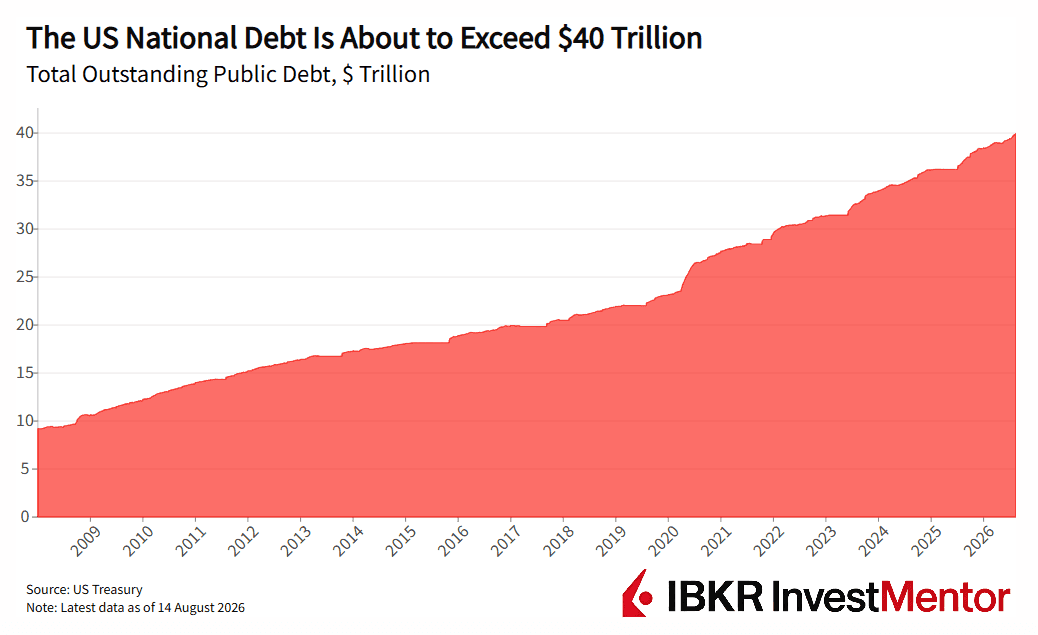
This inflation scare arrives with government finances already stretched. The US is about to exceed $40 trillion in debt, while high borrowing has also unsettled investors in Japan, France and Britain.
The danger is a nasty feedback loop:
Energy subsidies, rising defense costs, and slower growth could swell the bill further. Record heat waves in Europe have also raised concerns about infrastructure bills related to climate change.
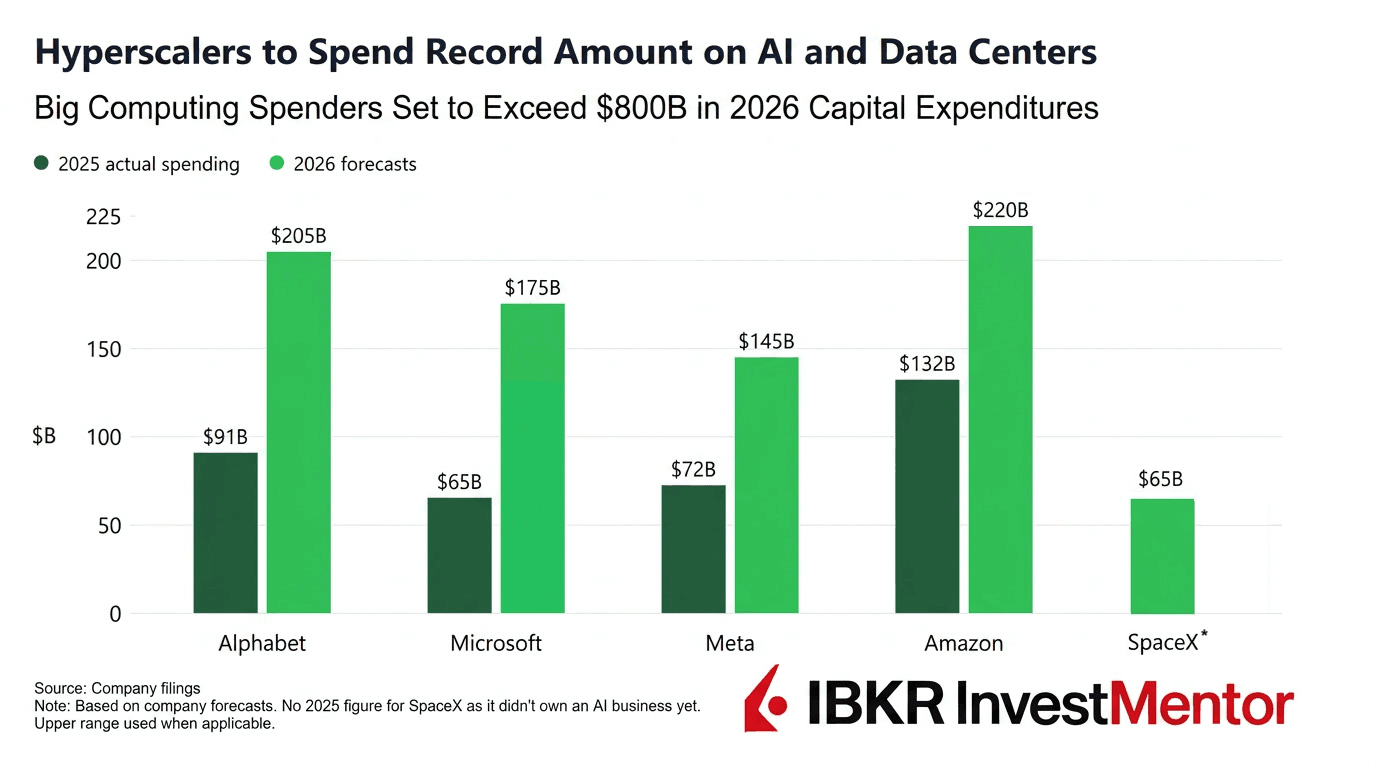
So-called hyperscalers — biggest computing spenders — are pouring hundreds of billions into data centers, chips, and power infrastructure. Increasingly, they are borrowing the money. Alphabet, Amazon, and Meta had issued almost $220 billion of bonds in 2026 by mid-August, already more than double their combined 2025 total.
Companies are set to issue a record $1.9 trillion of investment-grade debt this year, compared with last year’s $1.4 trillion, according to Barclays. That’s the lowest-risk debt that competes with government bonds for capital. AI-related debt issuance worldwide is expected to reach nearly $570 billion in 2026, according to Morgan Stanley.
Investors have a limited amount of money, so governments need to offer a better yield to remain attractive.
Want to explore more? Download our free app to unlock expert news updates and interactive lessons about the financial world.