
Economy
Trade Surge
China’s Export Machine Powers Through Tariffs
12/8/202512/9/2025
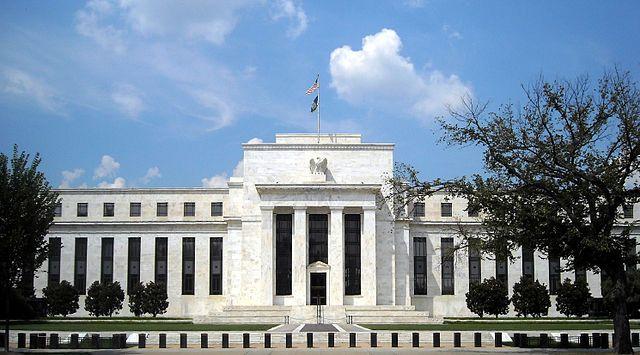
The Federal Reserve meets tomorrow to decide whether to deliver another 25 bps rate cut, and that decision runs straight through its dual mandate: maximum employment and price stability.
On paper, those goals seem aligned. In reality, they often pull in opposite directions – easing too much risks reigniting inflation, tightening too long risks weakening the labor market.
According to the IBKR Forecast Trader, 96% of participants expect a rate cut, so markets are clearly leaning toward more easing. How the Fed votes tomorrow will reveal how it’s weighing that tension right now, and how much risk it’s willing to take on either side of the mandate.
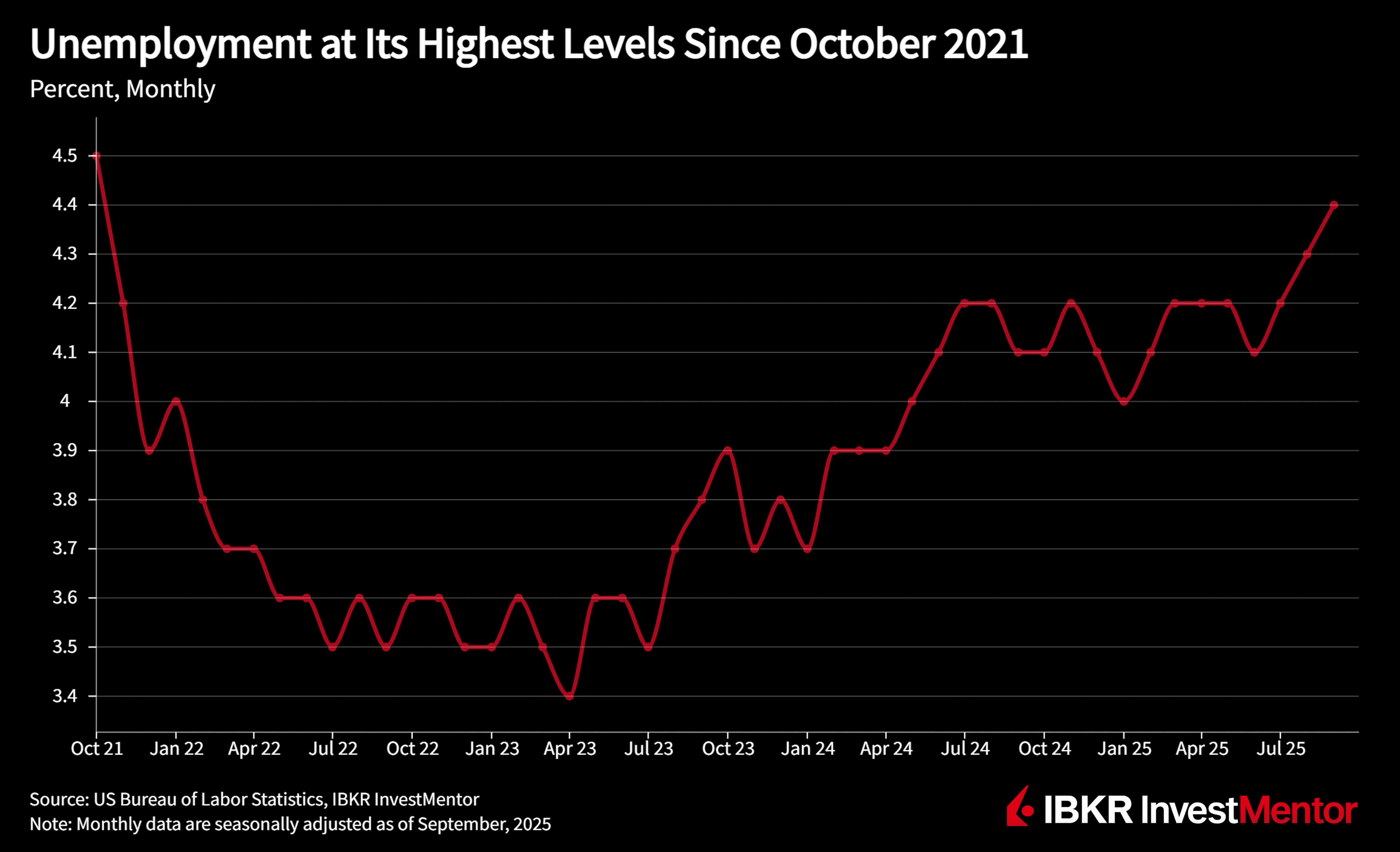
The employment side of the mandate is about keeping the labor market strong and inclusive. In plain terms, the Fed wants:
The challenge is that there is no fixed, universal number for “maximum employment.” It is not a specific unemployment rate. It depends on demographics, productivity, labor force participation, and the structure of the economy at a given time.
On the inflation side, the Fed aims to keep prices stable by holding PCE inflation at about 2% over time. In reality, inflation has stayed above that goal, with the latest data showing both headline and core PCE running at roughly 2.8% year-over-year.
Price stability is less visible than job gains, but just as important. It matters because:
Late-Cycle Tensions
The most challenging moments for the Fed are not when both sides line up (weak labor market and low inflation, or strong labor market and stable inflation), but when they diverge.
Typical late-cycle setup:
If the Fed focuses too heavily on employment, it risks letting inflation become entrenched, which would eventually require even more painful tightening to fix. If it focuses too heavily on inflation, it risks over-tightening and triggering a recession that pushes unemployment higher than necessary.
Policy Today, Outcomes Tomorrow
Complicating all of this are lags. Monetary policy works with delays:
That means the Fed is always making decisions based on imperfect, backward-looking data:
On both sides of the mandate, the Fed is effectively setting policy for the economy it expects to see 6–18 months from now, not just the data it has in front of it.
What This Means for Investors
For investors, understanding the dual mandate is less about memorizing the Fed’s 2% target and more about reading how the tradeoff is evolving:
When employment is healthy and inflation is close to target, the Fed has room to be patient.
When inflation is above target and the labor market is still tight, the Fed tends to lean harder toward price stability, even at the cost of some near-term job softness.
Want to explore more? Download our free app to unlock expert news updates and interactive lessons about the financial world.