Commodities
Logistics Trap
More Oil Flows but Why Do Prices Stay Persistently High?
10/5/2026
10/6/2026

Around 2,000 French high schools have closed, according to a students’ union. The government figure is nearly 900. Tens of thousands of students are protesting on streets, with 6,100 so far arrested — a clear majority of them minors.
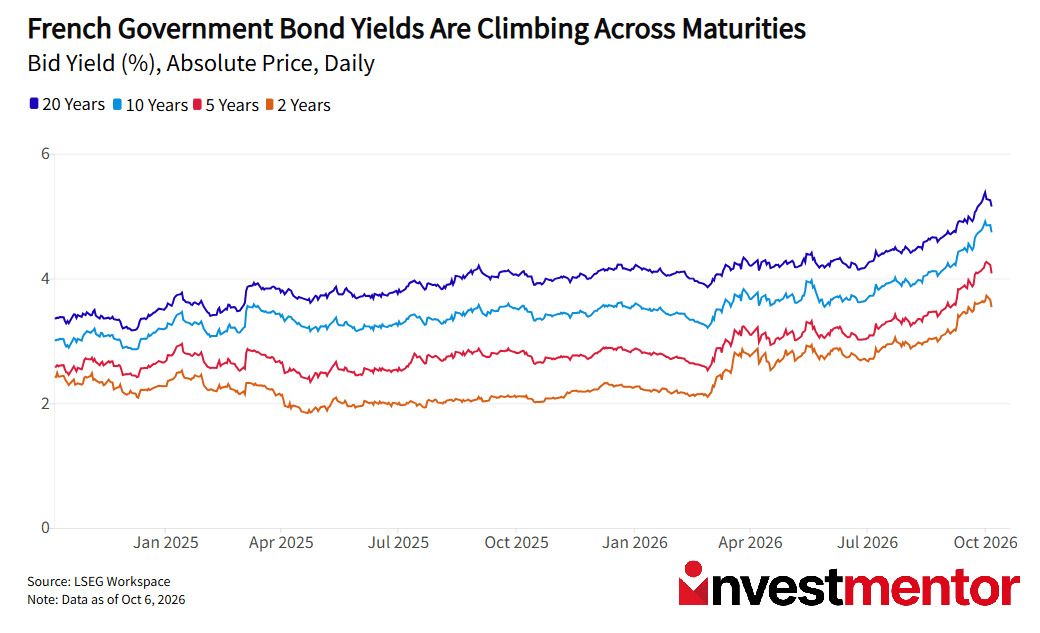
Protests started in poor neighborhoods of Paris but have spread around the country, with workers joining in. Fishermen have blocked ports in protest of high diesel prices. French bond yields are surging.
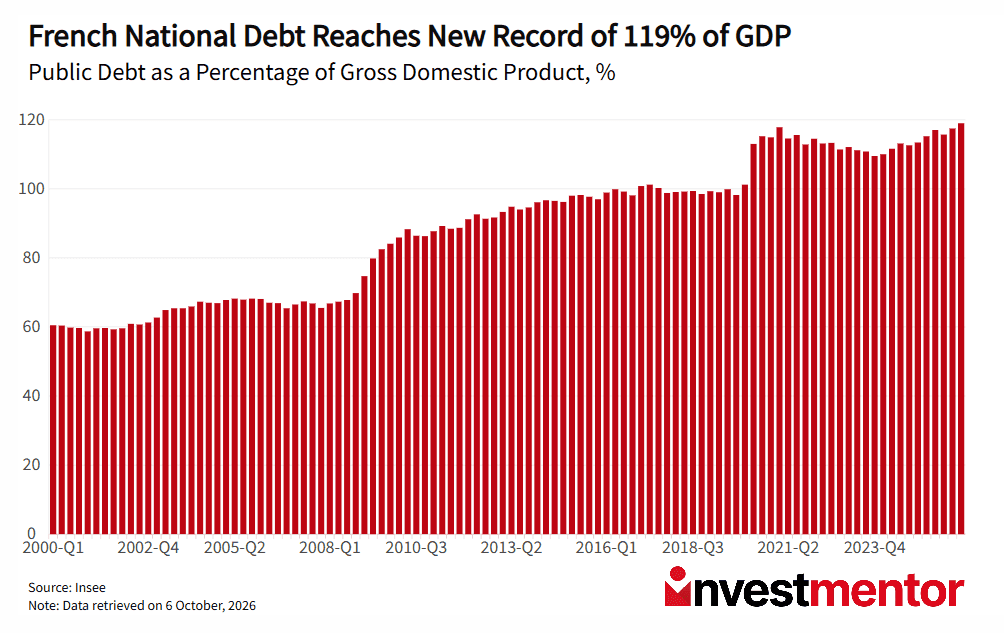
The common thread is money. France's national debt has climbed to roughly $4 trillion, equal to about 119% of annual economic output. Higher interest rates, rising fuel costs, an aging population, and growing military spending are all pushing government expenses higher. France doesn’t have money to fix dilapidated schools, but the public has no appetite for pension or healthcare cuts.
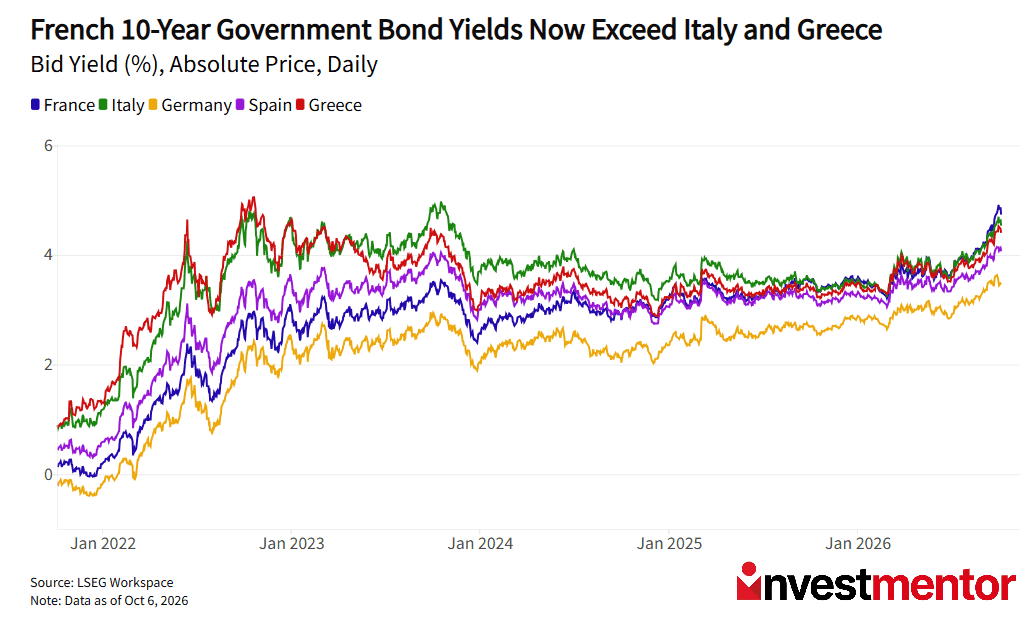
France's 10-year government bond yield has climbed close to 5%, one of the highest levels in the European Union. Investors are worried that politicians cannot agree on a credible plan to reduce deficits.
France has had four prime ministers since the start of 2024. The current one, Sébastien Lecornu, is onto his second government already. Liberal-centrist president Emmanuel Macron is about to finish his final term, with elections due in Spring. Far-right eurosceptic Marine Le Pen is leading the polls. It will be largely up to her party whether Lecornu’s proposed budget, with some tax hikes and spending cuts, will pass.
France hasn’t run a balanced budget in three decades, with 2026 deficit set to hit 5.4% of GDP. France's central bank governor Emmanuel Molin warned the country could be "gradually strangled by rising interest rates" if it fails to repair its finances.
France's fiscal crisis is a problem for students, workers, and families who depend on public services.
Students are angry because:
Workers are angry because:
The government's problem: Every major spending program has voters defending it. Nobody agrees on where the axe should fall.
As the leading presidential candidate, Marine Le Pen has spent months trying to convince voters and investors that she takes the debt problem seriously. This week she proposed a "golden rule" that would cap public debt at 60% of GDP and move the budget closer to balance by incremental 0.5% steps. This is very similar to German “debt brake,” which it largely ditched in 2025.
But France's finances have been deteriorating for decades. Successive governments have struggled to control spending, with widespread protests facing anyone who tries.
The gap between French and German government bond yields has widened to levels not seen since the 2010-2012 Eurozone debt crisis, while the euro has fallen to a 17-month low below $1.12 against the dollar. Investors are also demanding higher yields from other countries seen as riskier, including Italy.