
Commodities
Oil Ban
Sanctions Shake Up Global Oil Markets
10/23/2025
10/24/2025

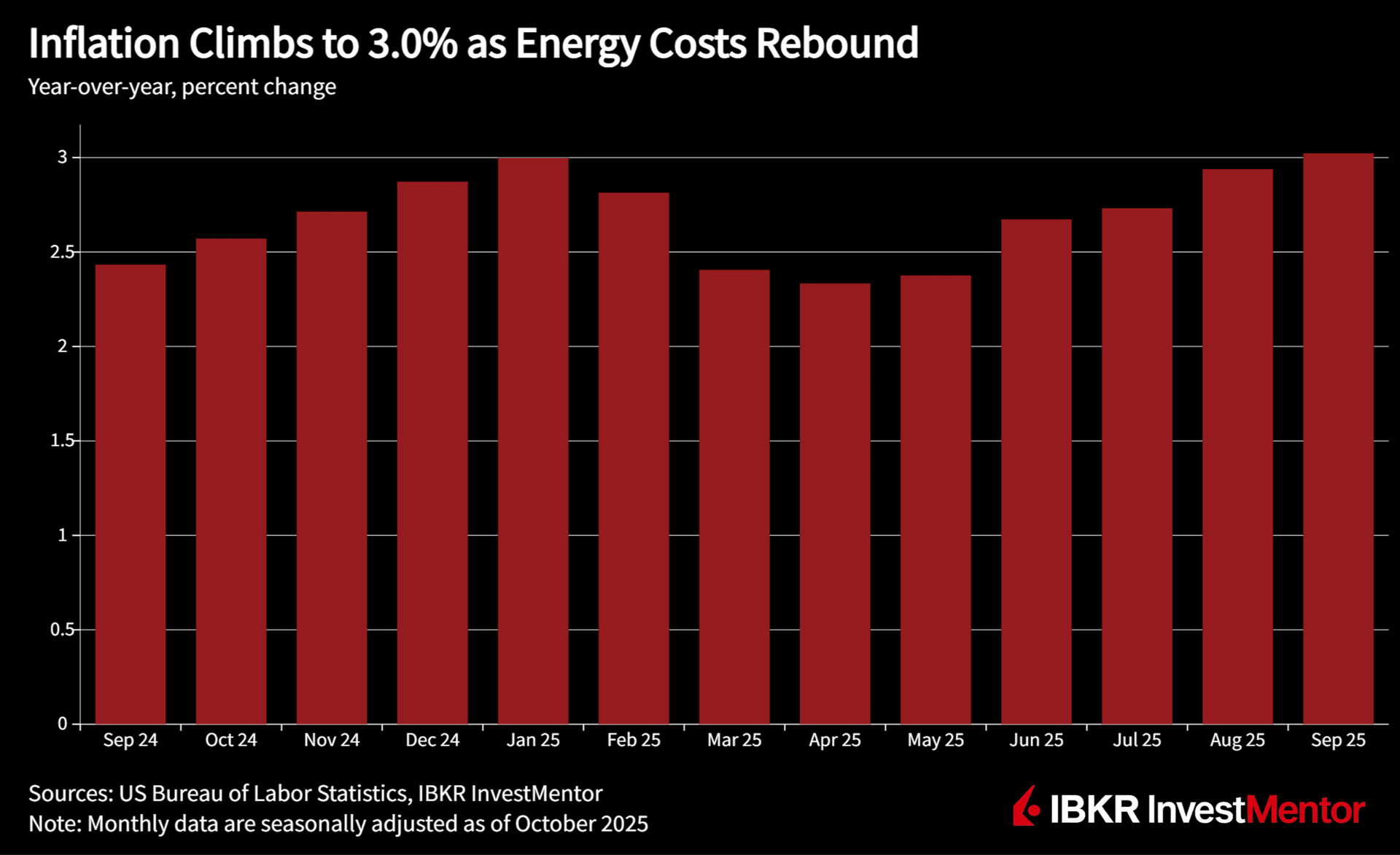
The US Consumer Price Index rose 0.3% in September, slightly slower than August’s 0.4% gain, suggesting inflation continues to moderate but remains uneven.
A 4.1% jump in gasoline prices was the biggest contributor to September’s rise, pushing the broader energy index up 1.5%. Electricity and natural gas costs fell, but higher pump prices kept the overall inflation reading firm.
The CPI came in slightly below forecasts, boosting hopes for looser Fed policy into year-end. Bond yields edged down, and equities rallied at the open.
The Fed's Open Market Committee (FOMC) is convening next week to decide whether to lower its benchmark overnight rate. Economists are expecting a 25-point cut to 3.75%-4.00% range.
While September’s inflation came out below expectations, it remains above the Fed's target. Sticky shelter costs (=rents and housing services) and rapidly rising gasoline prices complicate the outlook. The Fed remains cautious, but markets are leaning toward a dovish stance.
Investor lens: All eyes will be on the Fed next Wednesday. Rate decisions are big, market-moving events.
The Federal Reserve has a dual mandate to promote maximum employment and aim for a 2% inflation rate over time — but not just any inflation. The Fed's chosen inflation metric is officially the PCE Price Index, not the CPI.
Why PCE? According to the Fed, it better reflects how Americans actually spend — adapting faster to changes in behavior.
The two indices often move together, but CPI tends to show more stubborn price pressures in the short term. Both are carefully scrutinised by investors and central bankers alike, especially now, with few other data sources available.
Shutdown Blocks Key Economic Data
Following the delayed September CPI report, the White House said that October's inflation data may not come out at all.
Since the shutdown started at the beginning of October, most government reporting has halted — just as the Fed faces tough decisions.
The Fed is flying partly blind ahead of its upcoming rate decisions this year. Without official statistics, policymakers can rely on private and regional surveys — but those aren’t a full substitute. Investors and central bankers are left guessing on prices, employment, and consumer strength.