
Economy
US Inflation
What's Your Guess? 74% of the market predicts November inflation exceeds 2.9%. Do you agree? Join the consensus or fade the crowd.
12/16/202512/17/2025

A Chinese AI chipmaker MetaX surged nearly 700% in its Shanghai stock market debut, days after rival Moore Threads jumped 400% after its IPO.
Both startups — founded by former AMD and Nvidia executives just a few years ago — are riding Beijing’s push for chip self‑sufficiency.
MetaX IPO raised about $600 million and Moore Threads $1.1 billion, drawing backing from AI chatbot DeepSeek’s parent company High-Flyer. Both IPOs were oversubscribed over 4,000 times by retail investors.
While AI stocks zigzag in Western markets, with fears of a bubble growing, Chinese investors are piling into domestic chipmakers.
MetaX now trades at about 50 times sales, Moore Threads at 123, and both are still loss‑making. This compares with the multiple of 34 for Nvidia. Analysts warn that such peaks may be short‑lived, but policy drives investor optimism as China builds a homegrown chip industry.
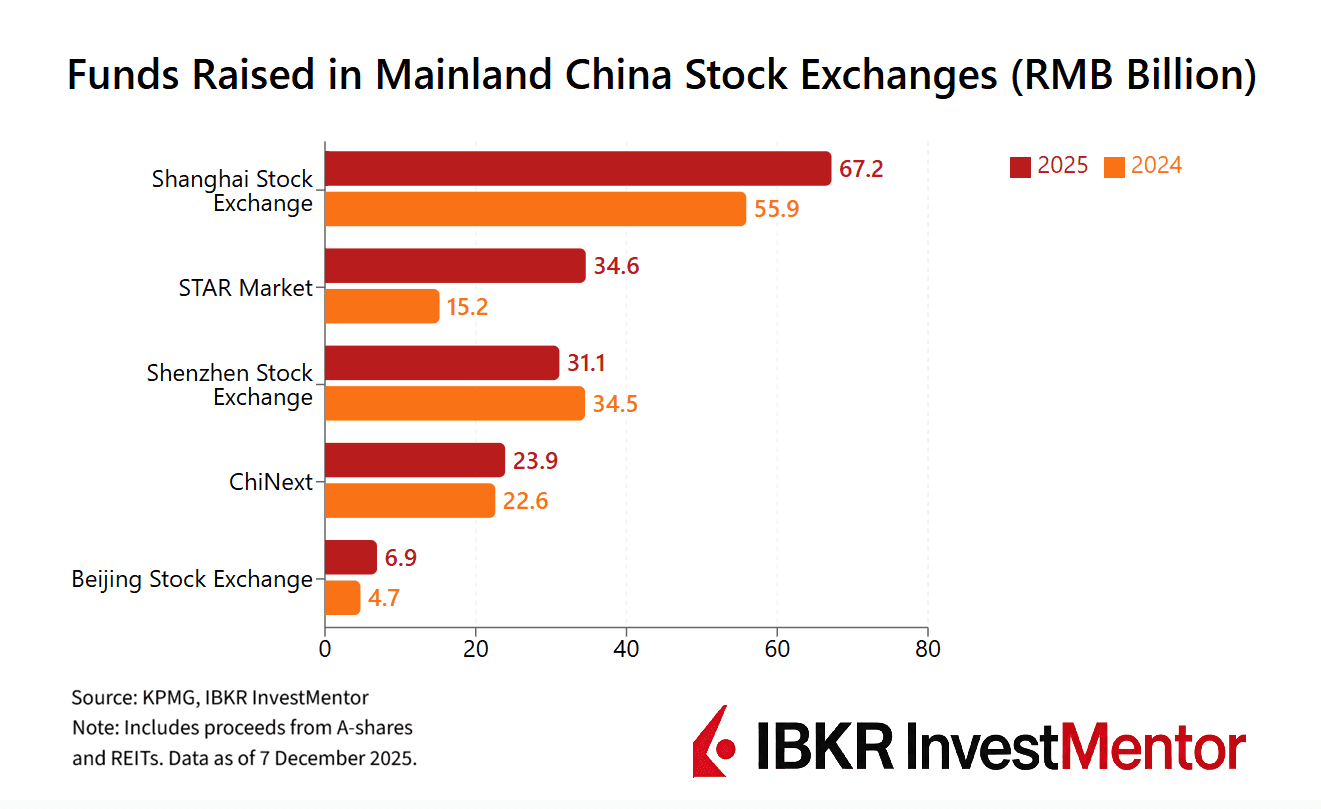
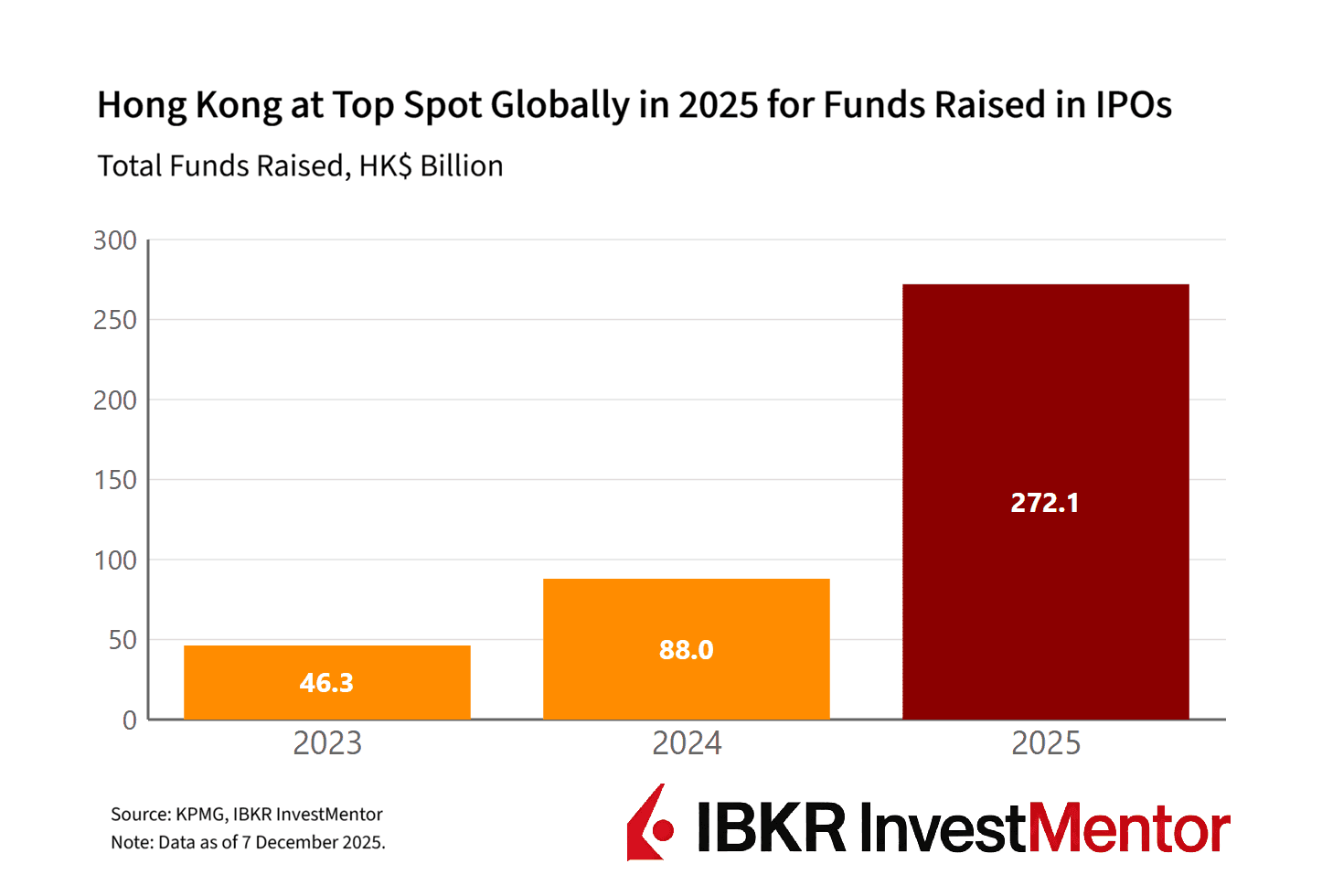
China is in the midst of an AI-led IPO boom, with fundraising up by 23% year-on-year on the mainland, according to KPMG. In Hong Kong, the numbers are even more impressive: IPOs have raised more than triple the amount last year.
China’s market for new listings operates very differently from Western systems, with allocation rules that shape both demand and volatility.
With Chinese property markets in crisis and overseas investments restricted, retail traders have few alternatives for high-yielding bets. Patriotic investing also plays a role, with many eager to back domestic AI champions.
A huge IPO pop, a share price surge at the trading debut, grabs attention but can signal mispricing or speculative demand.
MetaX’s 700% surge in share price and Moore Threads’ five-fold jump created windfalls for early investors but left investors exposed to volatility.
In mature markets, modest pops are seen as healthier. In China, the debut spike is part of the spectacle, but it can reflect hype rather than fundamentals. Post‑listing sell-offs are common, especially for startups still racing toward profitability.
China’s IPO boom sits inside a shifting geopolitical landscape. The US recently allowed Nvidia and AMD to sell some high-end AI chips, including Nvidia’s H200, to approved Chinese customers. However, the US offer still bars exports of Nvidia’s most advanced Blackwell chips.
It remains unclear whether China will greenlight H200 purchases or prioritize domestic chip production. Even limited access could benefit Chinese AI developers such as DeepSeek, Alibaba (Qwen), and Moonshot (Kimi) — while domestic chipmakers race to close the gap.
More chip IPOs are in the pipeline, with Biren receiving approval for a $300 million Hong Kong IPO, and Baidu’s Kunlunxin preparing a debut. After years of tightened IPO controls, Beijing is now fast‑tracking listings in strategic tech.
Want to explore more? Download our free app to unlock expert news updates and interactive lessons about the financial world.