Commodities
Iran Countdown
Markets Brace as the US Sets Deadline for Iran Talks
2/20/2026
2/23/2026
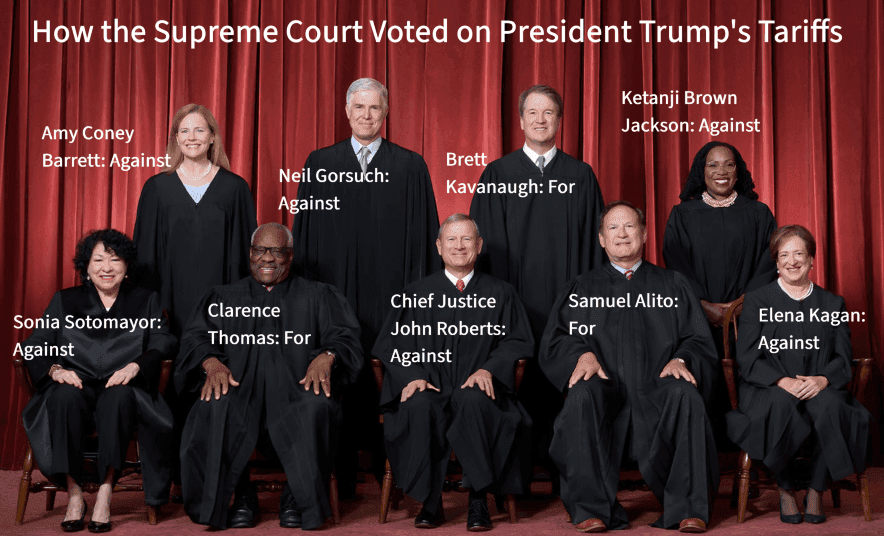
The US Supreme Court has struck down most of President Donald Trump’s global tariffs. In a 6-3 vote, the court said that the 1977 emergency law used by the White House doesn't give the president power to impose sweeping tariffs.
The court’s main points:
The administration has collected more than $130 billion under the old system, and businesses are now preparing to fight for refunds in the lower courts.
The president rushed to place temporary new tariffs of 10% on all global goods coming to America from 24 February onwards. He later announced the new rate would actually be 15%, but so far only the 10% rate has come into force.
The White House said the President has not had “a change of heart”, leaving markets rattled. These new duties are based on another 1970s law (Section 122) and can only be used for 150 days before Congress steps in.
Take away: Companies are trying to navigate constantly shifting tariffs. The Supreme Court left refunds up to lower courts, possibly triggering a years-long legal fight.
In April 2025, President Trump announced a “Liberation Day,” slapping sweeping tariffs on almost every trading partner, then offered a way out: cut a deal with Washington, invest in the US, and get lower “special” rates. Now the validity of the deals is questioned.
What’s happening abroad:
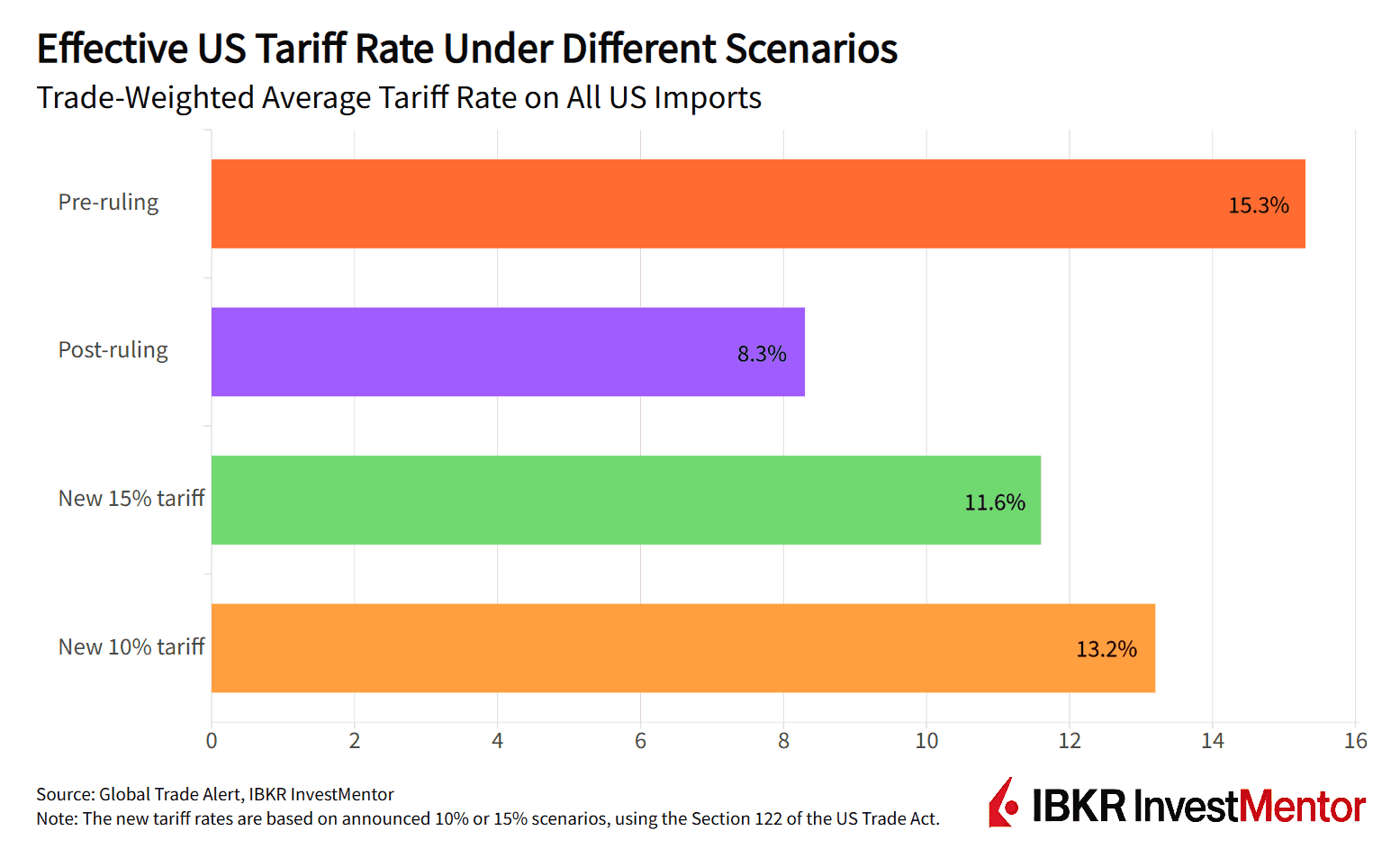
President Trump’s proposed 15% global tariff sounds simple, but the execution is messy. It’s a surcharge slapped on top of some baseline duties — but it doesn’t stack on certain sector‑specific tariffs like cars and steel that sit under different laws. The real hit varies widely across products and trading partners.
Economists focus on the trade‑weighted tariff rate, an average based on what the US actually imports. With exemptions and overlapping tariff regimes, the average rates for individual countries could vary from Ireland’s 5% to China’s nearly 30%, according to Global Trade Alert.
The Supreme Court’s ruling has pushed currency and bond markets into a wait‑and‑see mode. Lower tariffs could cool inflation, but refunding billions of illegal tariffs could also mean more government borrowing.
What’s moving now:
What’s next: Investors continue to monitor what happens to the refunds and whether the temporary replacement tariffs actually stick.