
Commodities
Strait Fight
America and Iran Both Want to Control the Oil Chokepoint
7/13/20267/14/2026
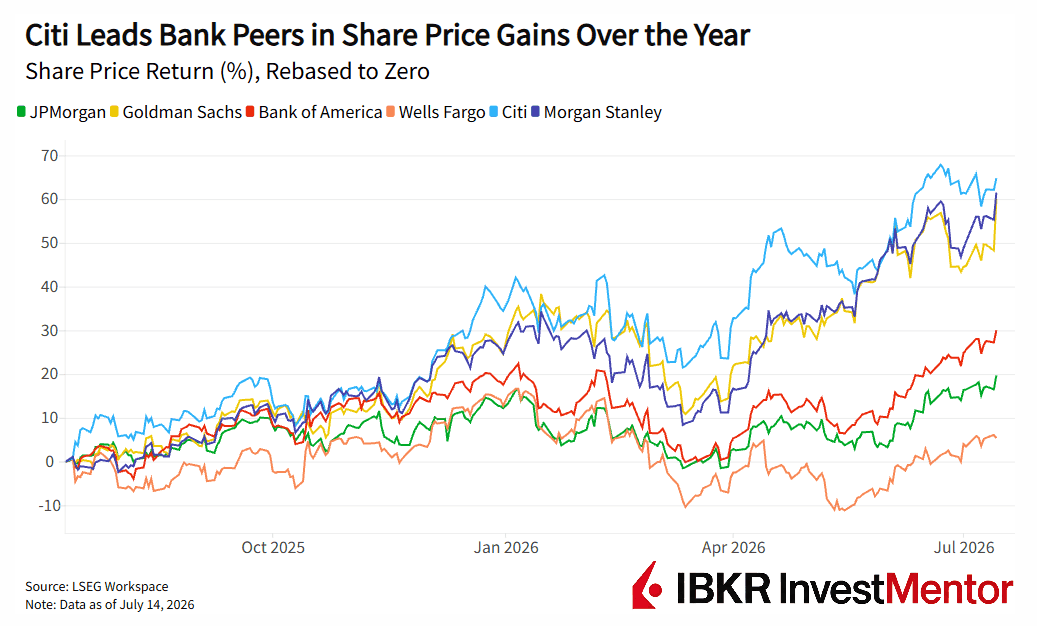
American bank titans opened the earnings season with a splash, with all beating analysts’ estimates and JPMorgan posting a record profit of $21.2 billion. Goldman Sachs earned $6.6 billion, nearly double a year earlier. Citi reported its highest quarterly revenue in a decade, while Bank of America and Wells Fargo also topped analyst forecasts. Morgan Stanley reports on Wednesday.
Big banks love a busy market. The Iran war, huge oil-price swings, and ups and downs of the AI boom pushed investors to reshuffle portfolios and hedge against risks. Volatile markets are often pure gold for banks because people trade more often.
Goldman Sachs equity trading revenue hit a record $7.4 billion, up 72% from a year earlier. For JPMorgan, the same number jumped 86%. Bank of America’s rose 70%.
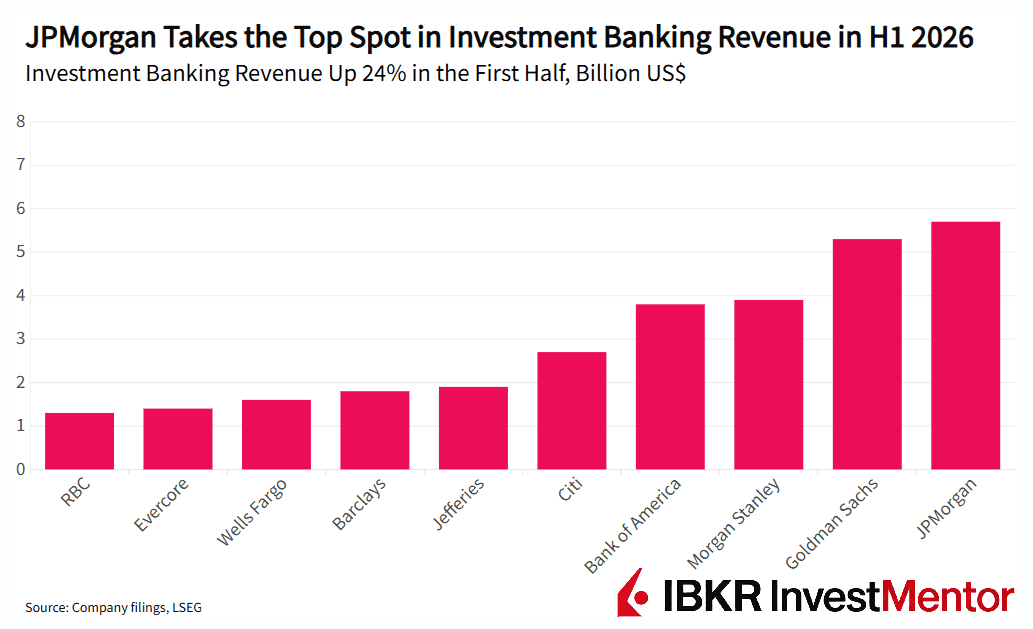
Investment banking had a monster quarter because companies started doing expensive things again: buying rivals, selling shares, issuing debt, and going public. Elon Musk’s SpaceX completed its record-breaking initial public offering (IPO), and Google-parent Alphabet kicked off the world’s largest equity issuance of $85 billion. Global mergers and acquisitions have already topped $3 trillion this year, according to data company Dealogic.
All these activities need bankers who are raking in fees:
Artificial intelligence has unleashed an unprecedented investment boom. Companies are racing to buy computing power, data centers, and related assets. That means more takeovers, share sales, and debt financing.
The four big hyperscalers alone — Microsoft, Alphabet, Amazon, and Meta — are set to spend more than $700 billion in capital expenditures this year.
JPMorgan pointed to AI-driven capital investment as one tailwind. Bank of America and Wells Fargo both worked on major AI-linked deals, including financing tied to Anthropic’s compute expansion. Two mega-sized IPOs, Anthropic and OpenAI, are in preparation.
The boring part of banking also held up: lending.
Net interest income, the gap between what banks earn on loans and pay on deposits, continued to grow across Wall Street. Citi's net interest income rose 13% from a year earlier. Bank of America's climbed 9%, JPMorgan's increased 10% (or 4% if you exclude its vast trading operations), and Wells Fargo's rose 5%.
Executives kept describing consumers as resilient. Lower-income borrowers are still squeezed by rent, food, energy, and high interest rates. But people are doing well enough for banks to make a business out of them.
Want to explore more? Download our free app to unlock expert news updates and interactive lessons about the financial world.