Flight Freeze🎥
11/16/2026
11/17/2026
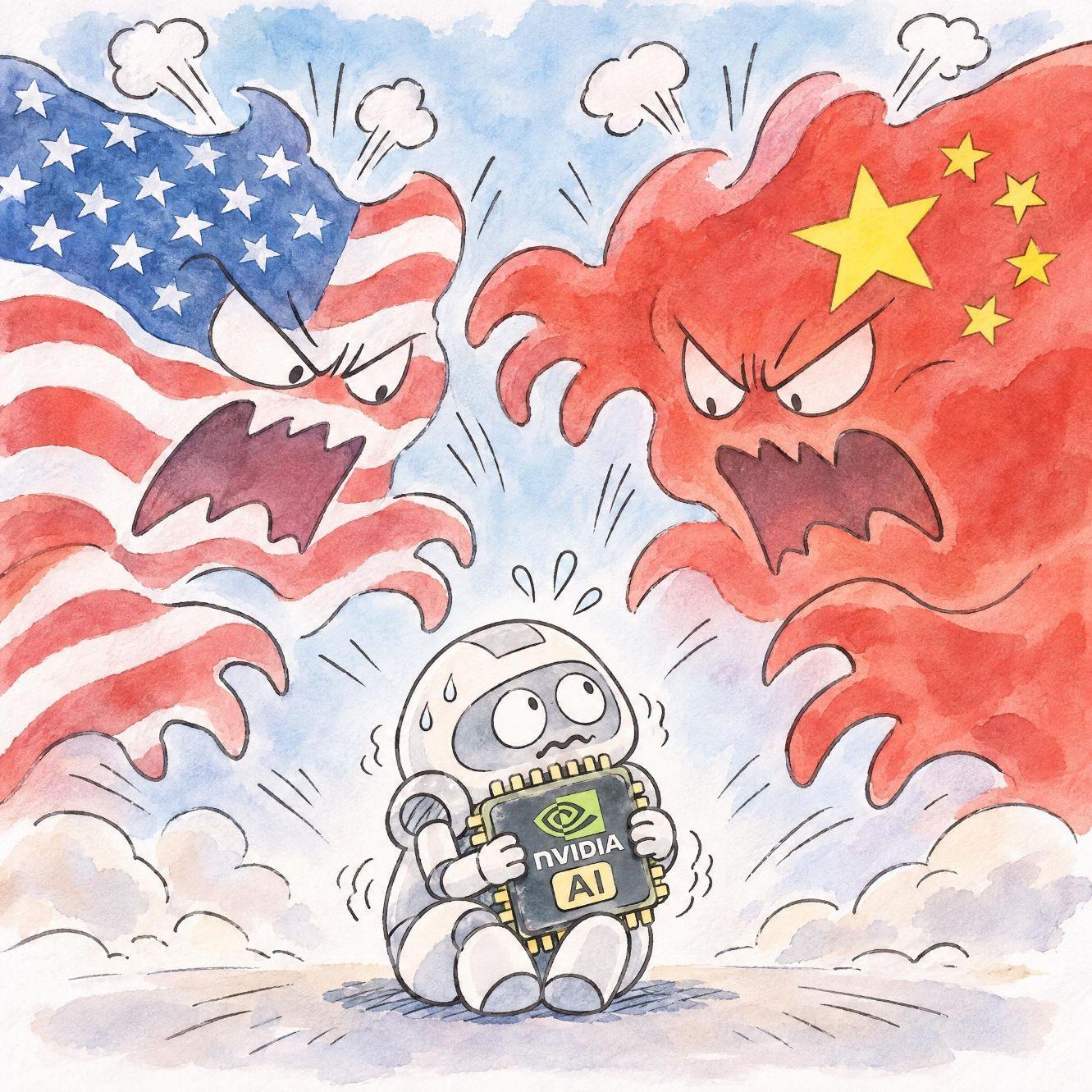
The US already restricts sales of the most advanced AI chips to China. But there was a rather large loophole: Chinese companies could access their computing power remotely through data centers elsewhere.
Now Washington is closing it. New rules require licenses for advanced-chip exports to Singapore, Malaysia, Thailand, Indonesia and Brazil, where regulators see a higher risk of diversion to China.
President Donald Trump’s administration had previously resisted broader restrictions on overseas access to US AI technology. But Nvidia CEO Jensen Huang’s scandalous exit put the company’s China ties under a microscope. Huang admitted to an affair with a woman US intelligence suspects of spying for China. Her former Singapore-based company, Megaspeed, is investigated for potentially smuggling Nvidia chips to China.
Nvidia is tightening its compliance procedures. After Jensen Huang’s departure, the company created a board-level committee to preside over chip export controls and national security. That sounds more like something out of Pentagon rather than Silicon Valley.
The new committee will:
The company tries to send a message that it understands that access to advanced AI chips must be carefully vetted.
Nvidia’s board made one thing clear on the earnings day on Tuesday: Jensen Huang isn’t getting his old job back, despite Huang putting out a statement saying he would be “honored” to return. The company has hired executive-search firm Heidrick & Struggles to find a permanent replacement.
Interim CEO Kress had some good news to deliver:
It’s not just chip trade that’s under scrutiny. The US plans to restrict new Chinese-made optical transceivers, components that move huge amounts of data between servers inside data centers.
Chinese companies supply roughly two-thirds of the global optical-transceiver market, according to Counterpoint Research. Amazon, Google, Meta, Microsoft, CoreWeave and Cisco have pushed back, warning the US could need up to a decade to replace Chinese equipment. It looks like the legislation is moving forward despite the intense lobbying, with the Nvidia scandal raising stakes in the US-China tech race.
There’s another risk: China could retaliate by further restricting critical mineral exports, including rare earths, used widely in tech and defense industry.
President Trump is heading into Thursday’s first three-way summit with China’s Xi Jinping and Russia’s Vladimir Putin. New chip restrictions and Nvidia investigation hang over the meeting.
Trump was reportedly briefed in October 2025 that US intelligence suspected Huang was having an affair with a Chinese spy. Yet Huang successfully lobbied his administration to loosen restrictions on Nvidia chip exports and accompanied Trump to China on a state visit.
Now US Congress is investigating what happened, with Huang and Commerce Secretary Howard Lutnick expected to testify and lawmakers seeking answers about what the administration knew and how it handled Nvidia.