Markets
Overdue Debut
Alphabet’s Late Dow Debut Shows an Aging Index Playing Catch-Up
6/29/20267/1/2026

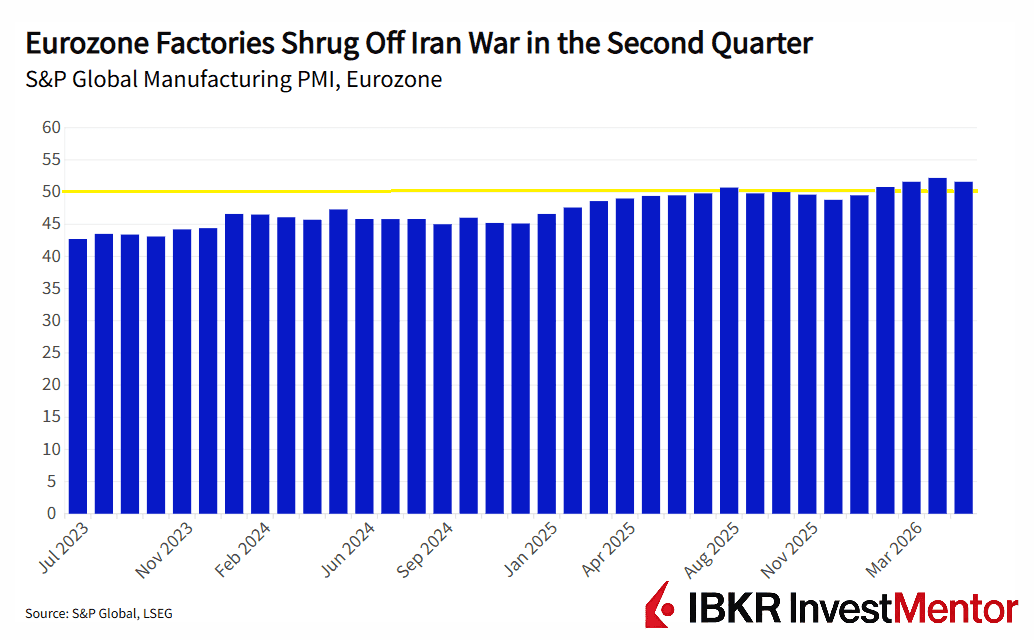
Global manufacturing is still growing despite a historic energy shock caused by the war in Iran. Inflation is on the rise, and new trade barriers are being raised. Yet the latest series of purchasing managers’ indices (PMIs) for June shows that output is chugging along.
A PMI is a monthly survey that shows whether business activity is growing (above 50) or shrinking (below 50). It’s one of the most widely followed leading indicators that gives hints on how well the economy is doing.
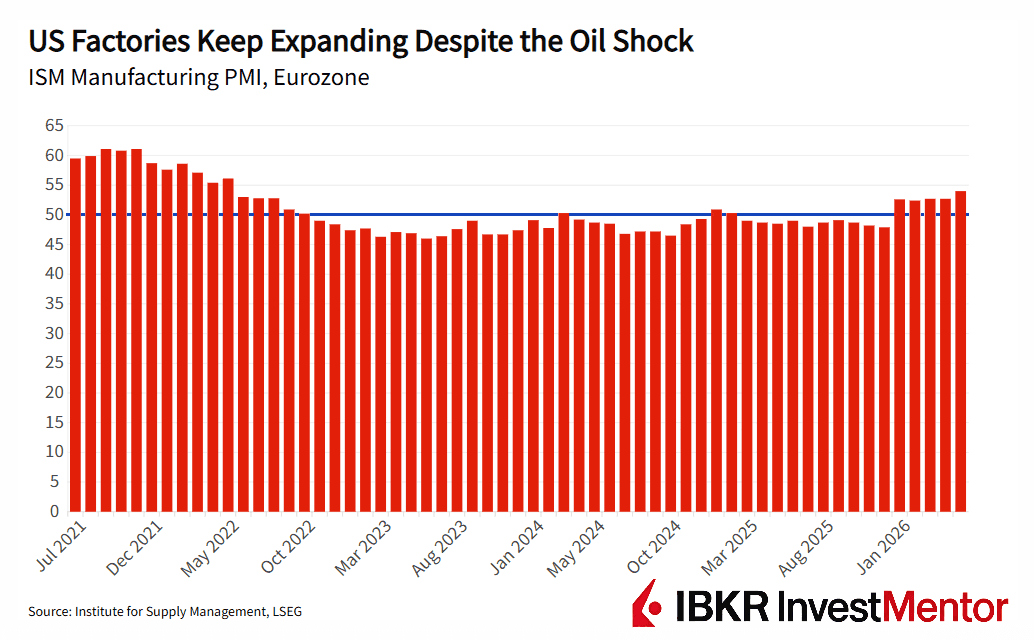
The Iran-linked energy shock is pushing up input costs, meaning the expenses factories pay to produce their products. Iran closed the Strait of Hormuz in late February, cutting off 20% of the world’s oil and liquefied natural gas flows.
While the traffic is gradually returning, it may take months for it to normalize. In addition to energy, fertilizer and chemical shipments have been hit, impacting everything from farming and mining to chipmaking and plastics.
But data implies that factories continue to buy materials despite rising costs and shipment delays. Much of the PMI data was collected before the June 17 ceasefire deal, so the potential upside of that is not even fully included.
Some factories are being propped up by a powerful new driver: artificial intelligence. This is particularly apparent across Asia where much of the actual manufacturing of chips happens:
Japan’s PMI, for example, hit 54.8, the sixth consecutive growth month. New orders grew at their fastest pace in over two years. Spending on chips and data centers is growing explosively this year, with a handful of hyperscalers — cloud-computing giants like Microsoft and Amazon — set to splurge more than $700 billion on them.
Resilience in the manufacturing sector is undeniable, but some indicators are flashing amber.
Want to explore more? Download our free app to unlock expert news updates and interactive lessons about the financial world.