Companies
Airspace Chaos
How War Scrambles Global Air Travel
3/6/20263/9/2026
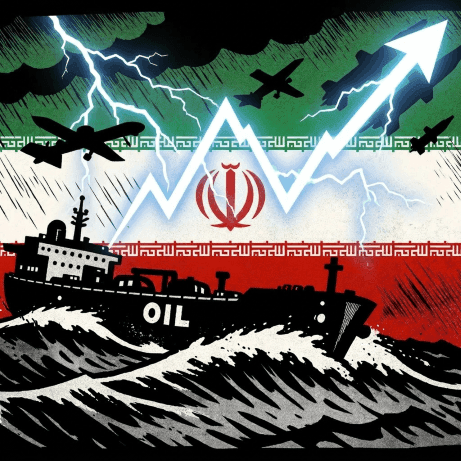
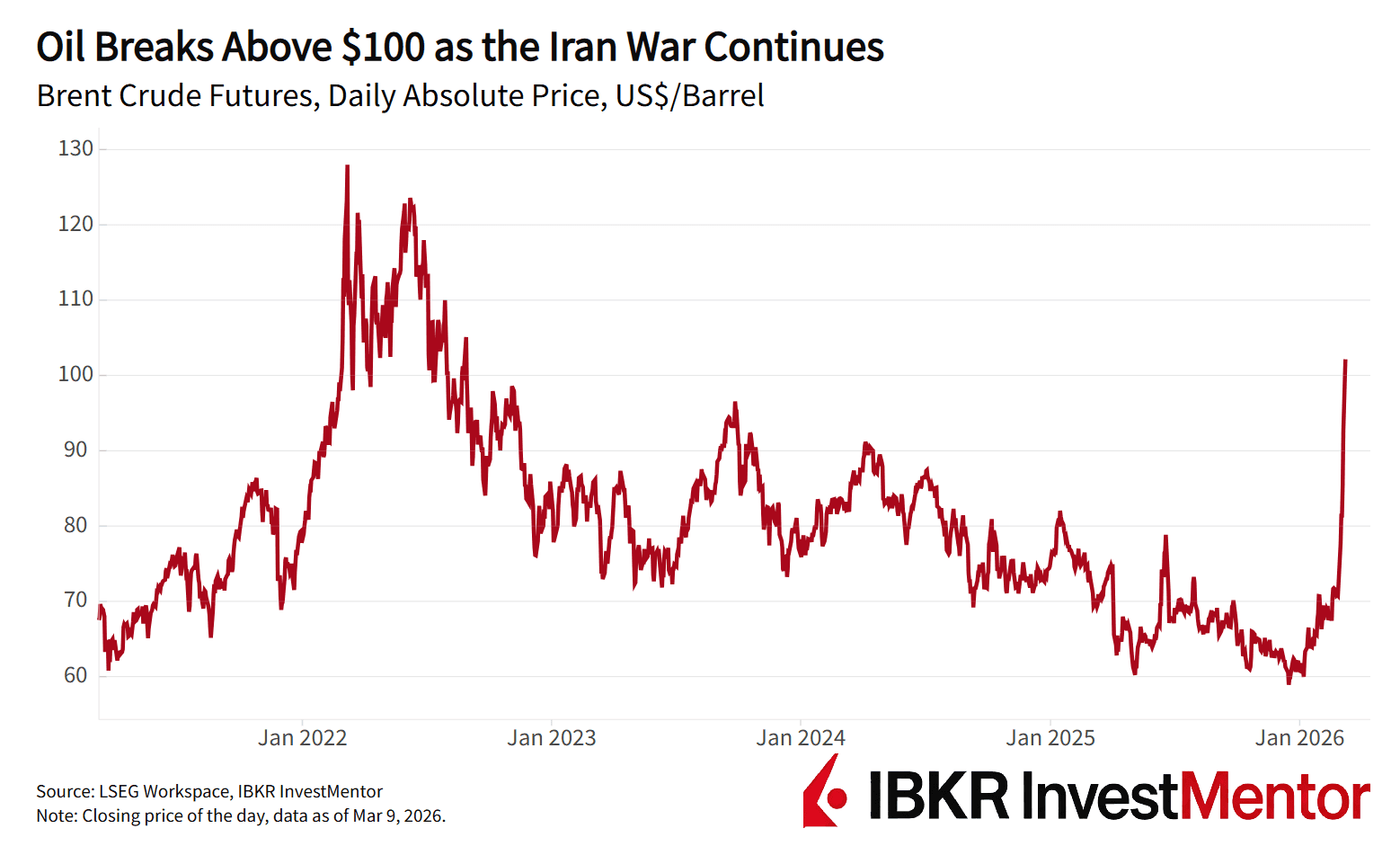
Crude oil prices surged well past $100 per barrel for the first time since 2022, as the markets opened on Monday. At one point, crude oil benchmark Brent jumped nearly 30% to $119.50 per barrel, the largest intraday jump recorded.
As the Iran war is expanding into a wider Middle Eastern conflict, investors are starting to price in the prolonged impact of disrupted oil deliveries.
Iran has effectively shut the crucial trade route of the Strait of Hormuz, and the longer the closure continues, the more damaging it is to the global oil supply. About 20% of the world's oil and liquefied natural gas passes through it.
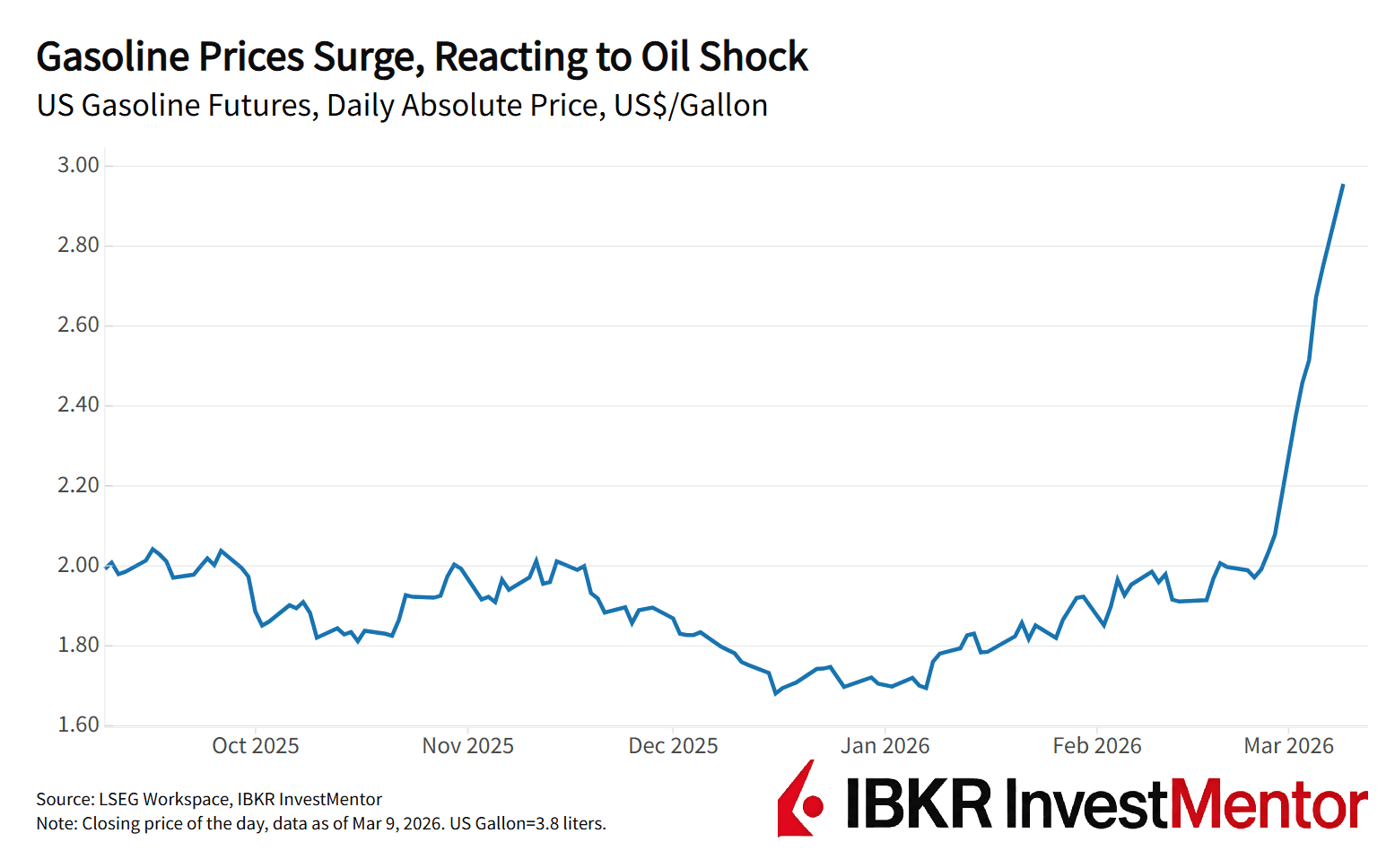
Before the US launched air strikes against Iran on 28 February, crude oil benchmarks traded around $70 per barrel. The price spike is feeding into gasoline and jet fuel, making consumers feel it in their wallets.
Even if you don’t drive or fly, higher energy costs raise the price of daily life across sectors. Oil powers transport, manufacturing, and heating.
When it becomes expensive, the cost of producing and moving goods rises too. When costs jump this much in one go, companies tend to pass at least some of the higher costs to consumers.
If the Strait of Hormuz stays blocked and supply remains disrupted, many countries could see inflation reaccelerate just as it had begun to cool.
High energy prices act like a brake on the world economy. Households have to spend more on essentials and cut back elsewhere. Businesses face higher logistics and production costs, which can reduce hiring and investment.
In its February outlook, the International Monetary Fund predicted the world economy would grow by 3.3% this year, with global inflation falling. With oil above $100 and shipping routes disrupted, economists may soon downgrade their forecasts.
Central banks of major economies have eased rates as inflation has cooled, but an oil shock this large forces a rethink.
The next signals come soon, as we’re approaching the Central Banks Super Week: the Fed meets on March 18, and the European Central Bank, the Bank of England, and the Bank of Japan follow on the 19th, giving markets a clearer read on how central bankers view this shock.
Oil shocks can shift economic power between nations.
Want to explore more? Download our free app to unlock expert news updates and interactive lessons about the financial world.