
Economy
Five-Year Plan
China Lays Out Plans for Tech Dominance
3/5/2026
3/6/2026

February’s jobs report delivered a headline that sounds dramatic, payrolls fell by 92,000, but the details read more like a speed bump than a crash. The unemployment rate ticked up to 4.4% from 4.3%, wages still climbed, and most of the damage looks temporary and concentrated rather than a broad hiring meltdown.
Quick decoder: Jobs Friday combines two surveys, the household survey (unemployment, participation) and the establishment survey (payroll jobs, hours, earnings).
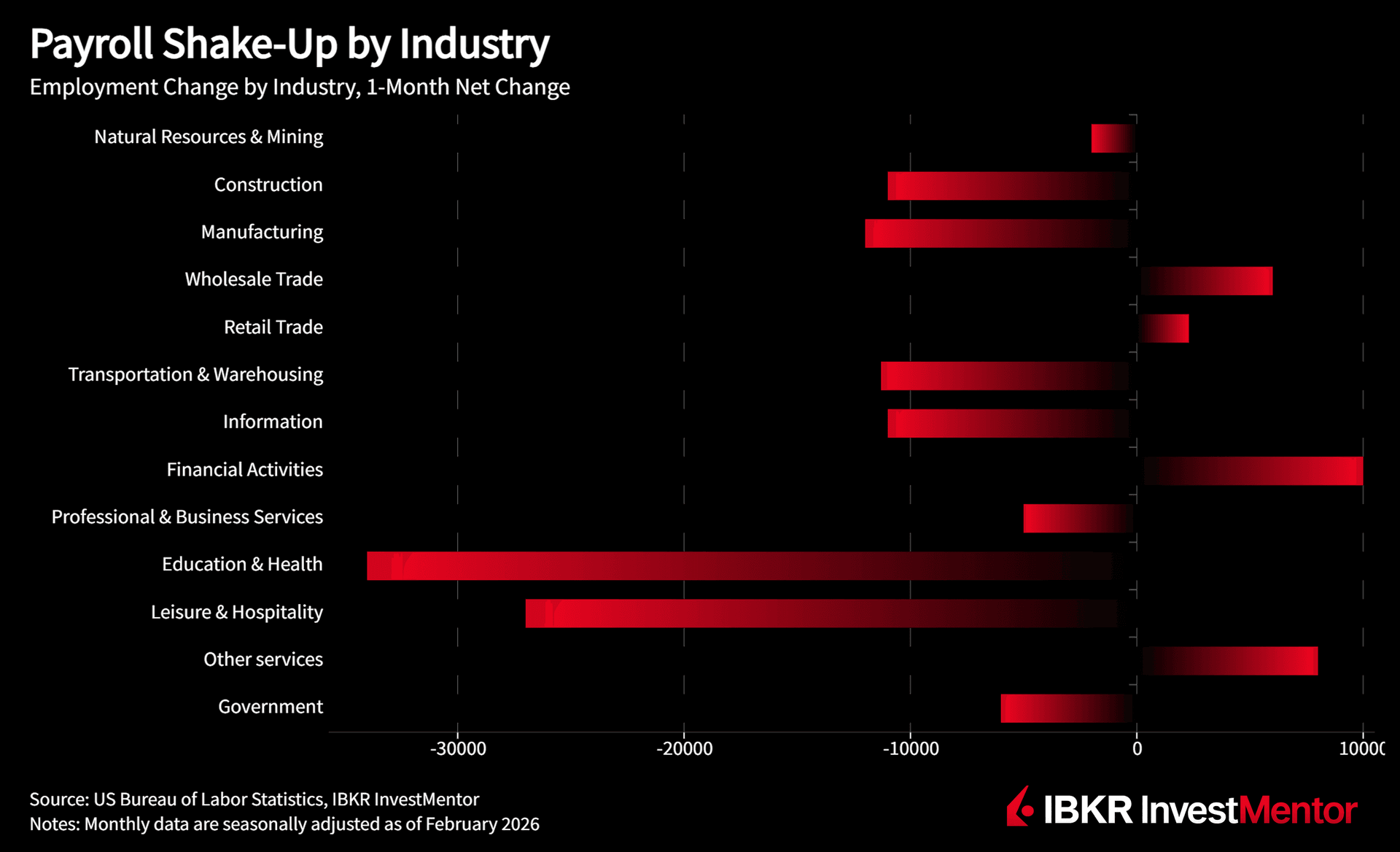
Here’s the clean snapshot:
Why markets care: payrolls grab attention, but wages + hours help answer the real question: “Is the labor market cooling or cracking?” Jobs Friday bundles all of that into one release.
This wasn’t a “everyone stopped hiring” kind of month, the softness was lumpy:
Meanwhile social assistance rose +9,000, and most other major industries were basically flat. Translation: February looks like noise + normalization, not a broad hiring freeze.
The “mood indicators” were mixed, and that’s what makes this report interesting:
The takeaway is that hiring seems to be losing momentum, but paychecks are still rising. That’s late-cycle territory, supportive enough to avoid panic, soft enough to keep the “what does the Fed do next?” debate alive.
What to watch next: Does health care bounce back post-strike? Do hours start sliding? Does long-term unemployment keep rising? And do revisions keep pulling prior months down?