
Commodities
Asia's Oil Shock
How the Iran War Is Exposing Asia’s Dependence on Gulf Oil
3/30/20263/31/2026

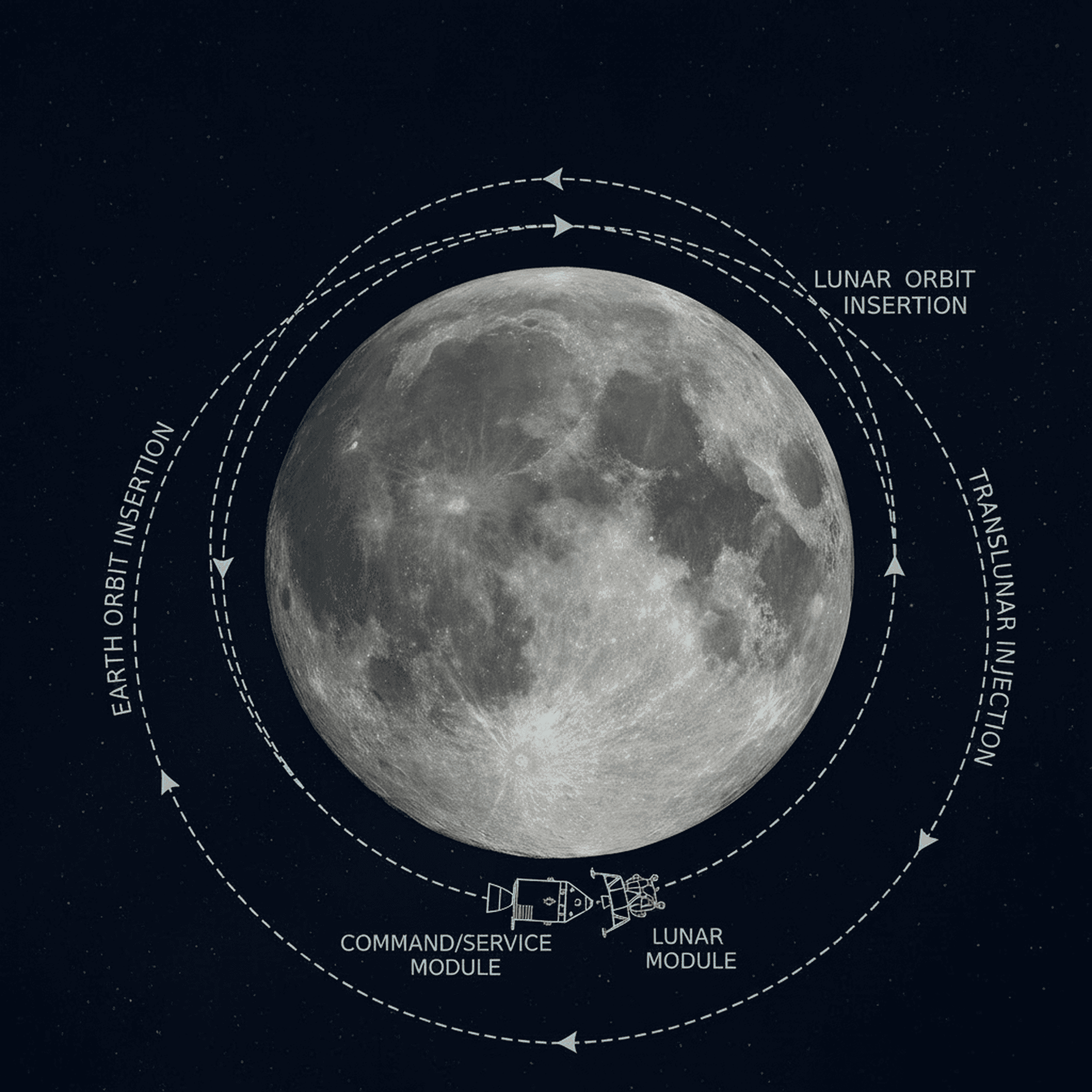
Artemis II is set to be the US space agency Nasa's first crewed flight of the SLS rocket and Orion capsule. The roughly 10-day mission with four astronauts will loop around the Moon without landing. Nasa is targeting a launch date of April 1.
Artemis II is a "test drive" of spacecraft systems beyond the Earth's orbit. It will check if the hardware, crew procedures, and mission architecture all hold up before Nasa commits to an actual landing.
A successful mission would clear the path for the lunar landing mission, which could take place as early as 2028. This could unlock more funding, lead to a steadier pipeline of contracts across the supply chains, and reawaken the space economy.
The US isn't the only nation trying to get to the Moon. Other governments are also building serious lunar capability, with systems for communications, power, navigation, and long‑term operations already in development.
China is probably the most advanced challenger, with a crewed Moon landing targeted by 2030, followed by a scientific base near the lunar south pole in the 2030s, where ice and water are thought to exist.
When multiple nations invest in space infrastructure, spending becomes more predictable. Demand spreads across launches, hardware, and services, creating supply chains. That's when space stops being just a government program and starts becoming an industry.
SpaceX has been going public "someday" for years, but major outlets are now treating it as a serious near-term event. Elon Musk's rocket and satellite company has reportedly lined up at least 21 banks to help with an initial public offering (IPO), which is expected to be the largest on record. SpaceX is looking to raise $75 billion at a $1.75 trillion (Yes, trillion with a “T”) valuation, the reports say.
Public-market funding could give SpaceX the capital it needs to back long-horizon projects that are harder to finance through private rounds, especially as it expands further into satellites, communications, and broader orbital infrastructure.
A public SpaceX would give investors a reference point, helping to value the wider space sector. With government-led space programs making a comeback and private space companies racing alongside them, investor attention is shifting too.
Key points for space investors:
Want to explore more? Download our free app to unlock expert news updates and interactive lessons about the financial world.