
Companies
Pharma Feud
A Tale of Two Pharma Stocks
11/24/202511/25/2025

Before prices hit your shopping cart or gas tank, they move through the production pipeline, and that's where the Producer Price Index (PPI) comes in. PPI tracks what businesses pay each other for goods and services at the wholesale level, essentially measuring "factory-gate prices" before costs reach consumers.
Think of it as inflation's early warning system: when producer costs rise, those pressures often work their way downstream to consumer prices, making PPI an essential gauge for anyone following inflation trends and Fed policy.
A critical distinction in PPI data is between headline and core measures:
This distinction matters significantly for Fed watchers: persistent core inflation would signal entrenched pricing power across industries, while volatile headline moves driven by energy are typically more transient.
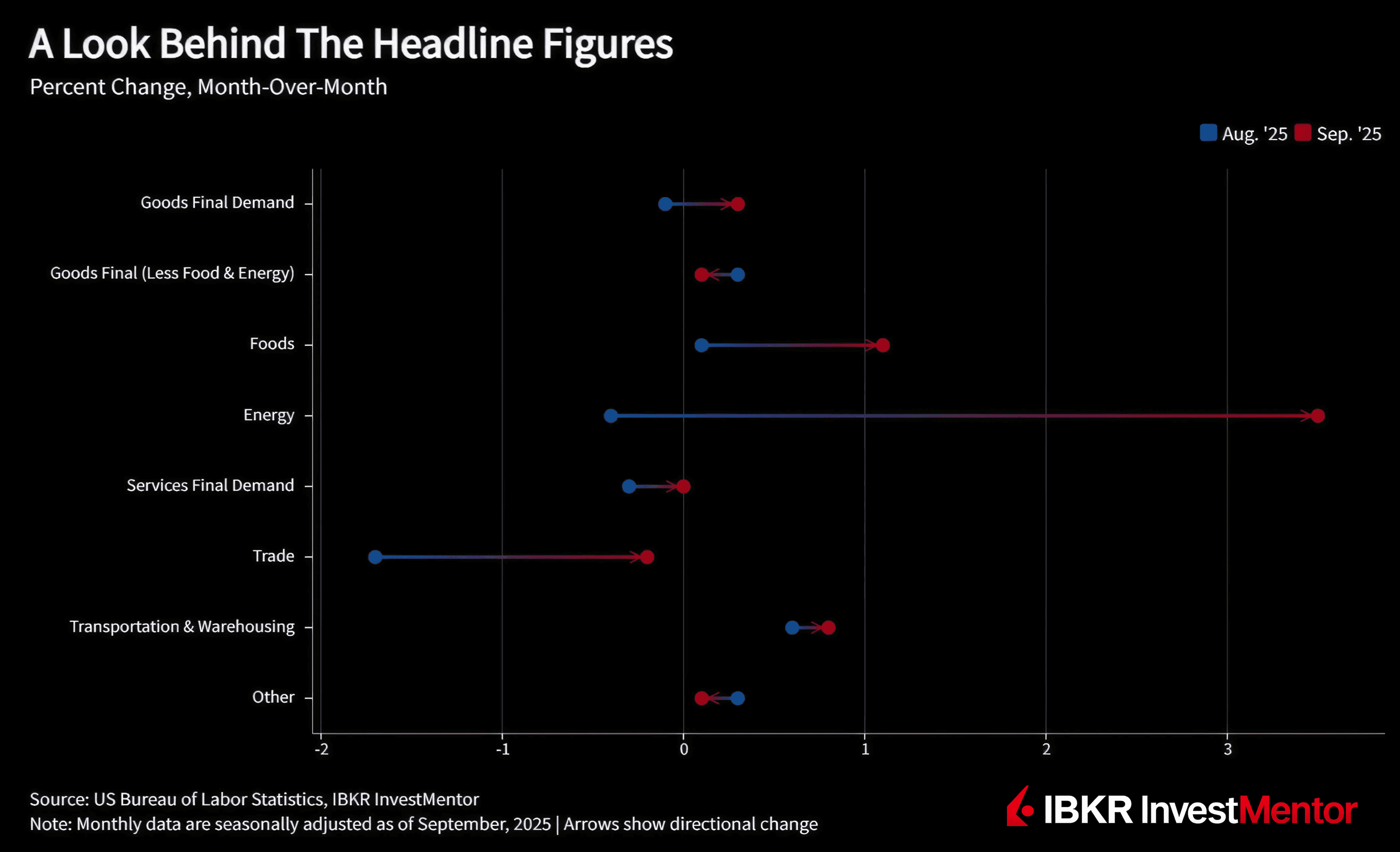
September's PPI for final demand rose 0.3% from August and is up 2.7% over the past year, reversing a small decline the prior month. Data collection wrapped up before the recent federal funding lapse, so the shutdown didn't affect these figures. Beneath the headline, the story is concentrated in specific sectors rather than broad-based:
Price increases:
Offsetting factors:
Beyond final demand, intermediate goods and services, the inputs businesses buy to produce other products, deserve close attention. These upstream prices can foreshadow future cost pressures:
These movements matter because they represent costs that manufacturers and service providers will eventually need to absorb or pass along.
September's PPI report points to moderate, energy-led inflation, not a broad price surge. The headline index is up 2.7% over the past year, heavily influenced by that 11.8% jump in gasoline and higher food costs. Core PPI, however, looks calmer: up just 0.1% monthly and 2.6% annually, suggesting underlying price pressures remain relatively contained across most sectors.
For Fed watchers, PPI is an early signal. If producer costs, especially core, keep rising and spread beyond energy and a few categories, those pressures can eventually show up in consumer prices and influence how the Fed approaches future rate cuts as it balances employment support against inflation control.
Want to explore more? Download our free app to unlock expert news updates and interactive lessons about the financial world.