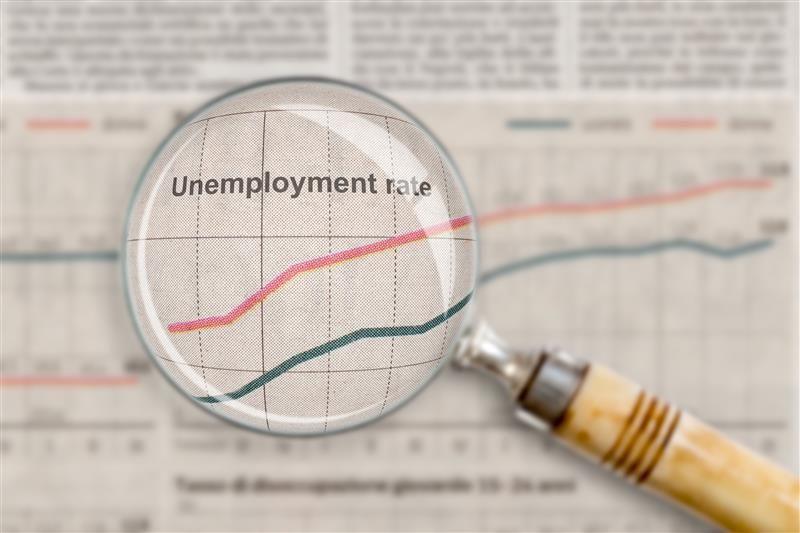
Economy
US Unrate
US Unemployment Rate Loosened Ahead of the Shutdown
11/20/202511/20/2025

The world’s most valuable public company Nvidia just released blockbuster earnings, cooling down predictions of an AI stock bubble.
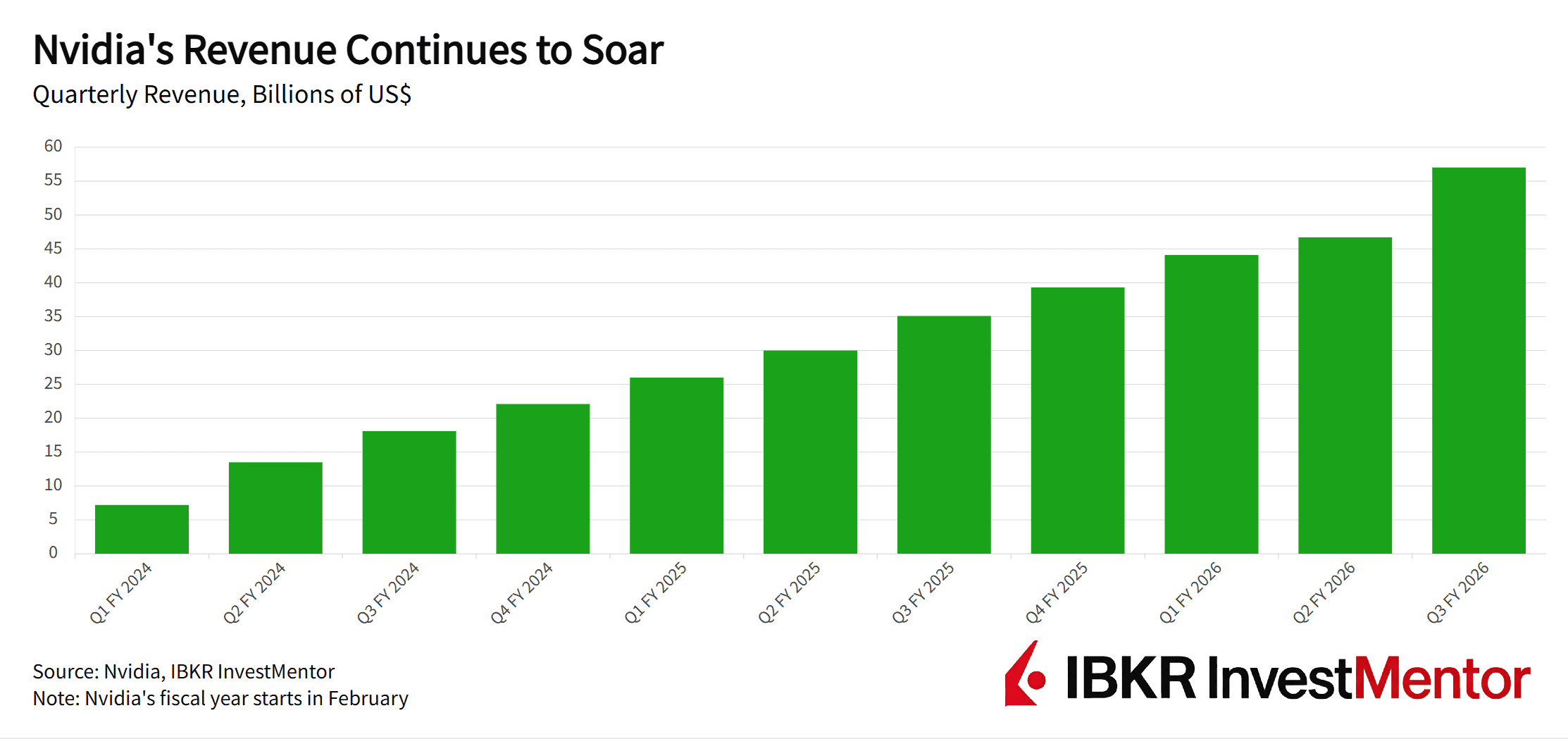
Fiscal third quarter results beat lofty expectations with revenue of $57 billion (up 62% year‑on‑year) and net income of nearly $32 billion. Ambitious guidance of $65 billion in revenue for the final quarter also took the market by surprise, sending shares up 5.5% after hours.
Bubble fears: While some AI leaders have admitted to frothy valuations, Nvidia CEO Jensen Huang said he sees “something different”, calling AI “revolutionary” and his company “unlike any other accelerator”.
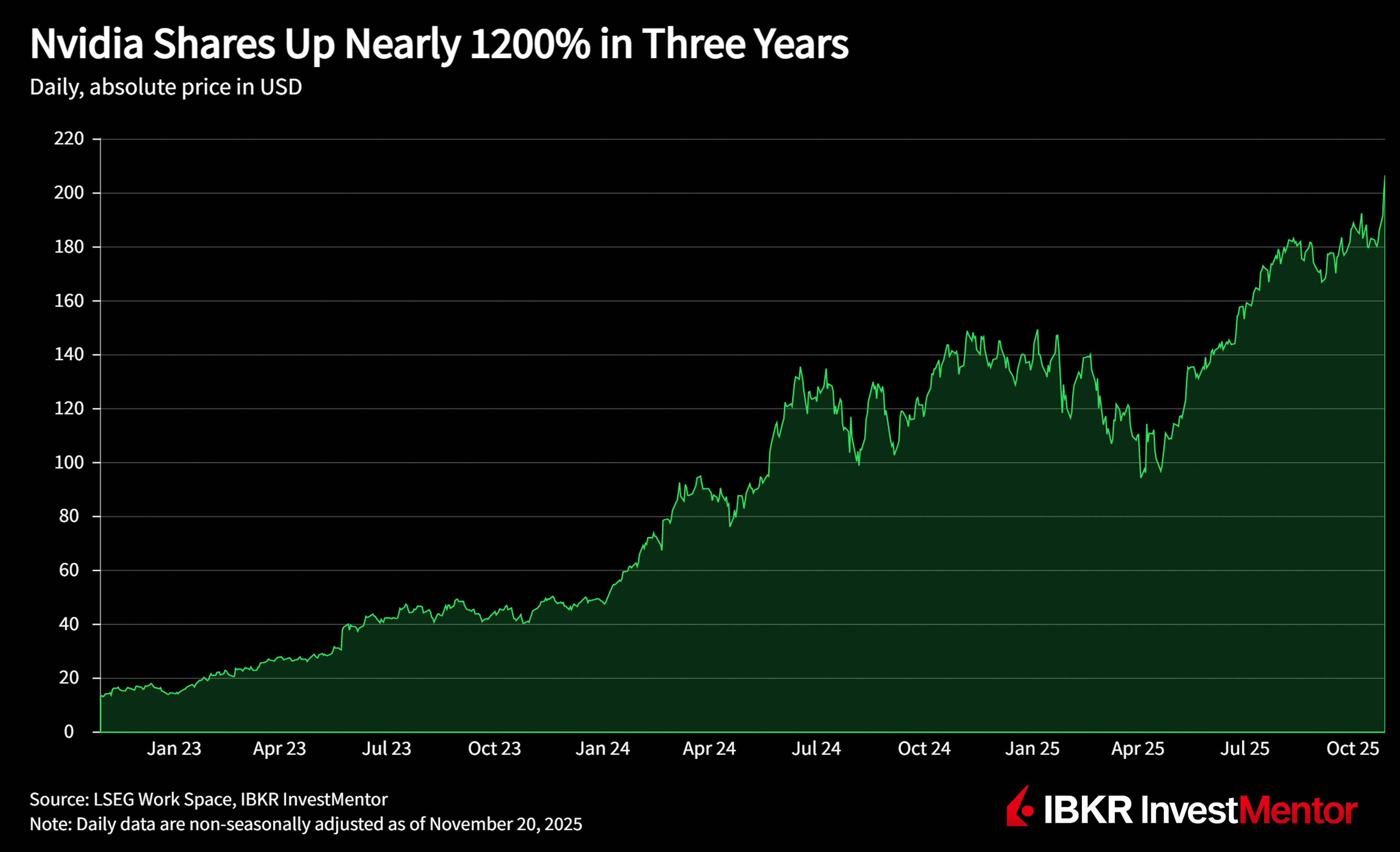
Nvidia doesn’t manufacture chips, yet it’s valued at over $4.5 trillion — roughly the GDP of Germany, the world’s third-largest economy. The reason: design beats assembly.
Both companies are vital to the overall chip supply chain, but they occupy the lower‑margin side of it. Kind of like Foxconn building iPhones for Apple.
Lesson: In tech, the company with the design and direct customer ties wins the margin war.
Historically, the biggest profits go to whoever controls the standard — think Windows in the 1990s or iOS in the 2010s.
In AI, Nvidia’s programming layer CUDA has become the standard, and the company has been quietly building it since 2006. CUDA is the “operating system” for AI hardware. Developers write for CUDA, not for GPUs in general.
That means switching to AMD or Intel would require rewriting code and retraining engineers, a costly slowdown. Nvidia isn’t just selling chips; it’s selling the entire AI infrastructure system. In investing terms, this kind of durable edge is called a moat: the defenses that protect a company’s profits from rivals. Owning the software layer makes Nvidia’s moat deeper than hardware alone.
Big tech firms are locked in an AI arms race, each pouring billions into data centers to power their own AI models or those they back. That spending in high-end chips flows straight into Nvidia’s pocket.
Nvidia’s soaring valuation has investors debating whether its rise is built on a solid foundation.
Key concerns:
Want to explore more? Download our free app to unlock expert news updates and interactive lessons about the financial world.