
Economy
Crushing Prices
US Inflation Caught a Second Wind
5/12/20265/14/2026
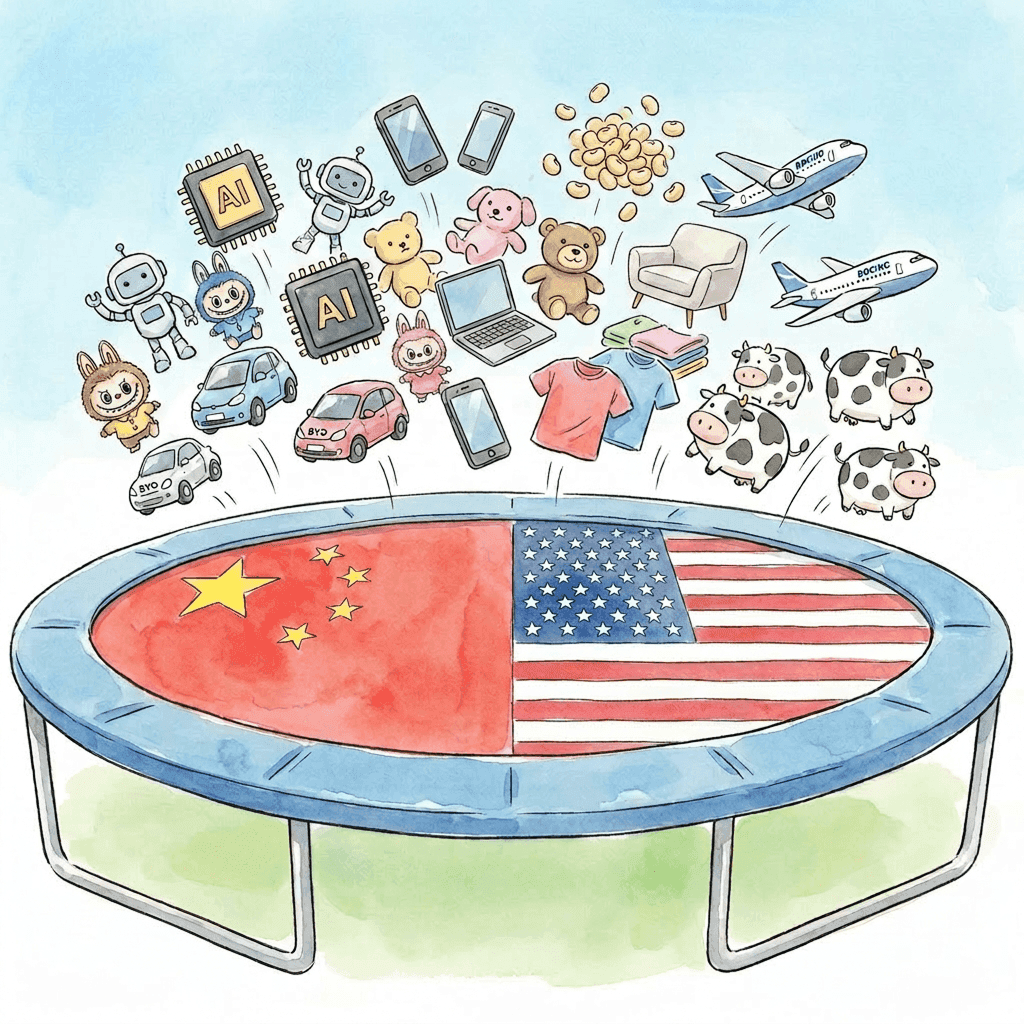
It was the first US presidential visit to China in nine years, showing how strained the relationship between the world’s two largest economies has become.
The agenda for US President Donald Trump and Chinese counterpart Xi Jinping was packed for the 3-day summit: tariffs, rare-earth metals, AI chips, Taiwan, and the Iran war. While the meeting was cordial, Trump left Beijing with no major deals or public commitments from either side.
Xi made one point clear: Taiwan is the red line. Mishandle it, and the relationship breaks.
The US and China now make up over a third of global GDP. When Washington and Beijing clash, the world pays.
A quick recap of the latest tiffs:
US officials said progress was made to identify $30 billion of “non-sensitive” goods on both sides that would get a reduced tariff rate.
Taiwan dominated the start of the summit. Beijing insists the island is non‑negotiable. Xi warned that if the US overstepped, it could lead to “clashes and even conflicts, putting the entire relationship in great jeopardy.”
China views Taiwan as part of its territory and seeks reunification. The US does not recognize Taiwan as an independent country but supports its self-defense and opposes any forced change to the status quo.
Washington keeps selling weapons to Taiwan, with $11 billion approved and another package in the works, expected to reach $14 billion.
The chip fight has taken a turn. The US is now open to selling less-advanced AI chips to China, but China is in no rush to buy them.
This is because Beijing wants to reduce reliance on foreign tech and push companies toward domestic alternatives like Huawei, which has produced chips that can run DeepSeek’s latest AI model. Before the US trade curbs on advanced chips, Nvidia dominated that space in China with a 95% market share.
No breakthrough was announced on the crucial rare-earth issue. China controls almost all global refining for metals like samarium, yttrium, and dysprosium. These are essential for aircraft, EV motors, chipmaking tools, and defense systems.
Beijing halted most exports last spring, with some metals fetching more than 100 times higher prices outside China. A tougher set of controls was postponed for one year, and companies hoped the Trump-Xi summit would deliver an extension.
Top US executives — including Nvidia’s Jensen Huang, Apple’s Tim Cook, Tesla’s Elon Musk — joined Trump in Beijing, highlighting how keen top American CEOs are to build strong relations with China.
Want to explore more? Download our free app to unlock expert news updates and interactive lessons about the financial world.