
Commodities
Gold & War
The Iran War is Testing Gold's Safe Haven Status
4/1/20264/7/2026
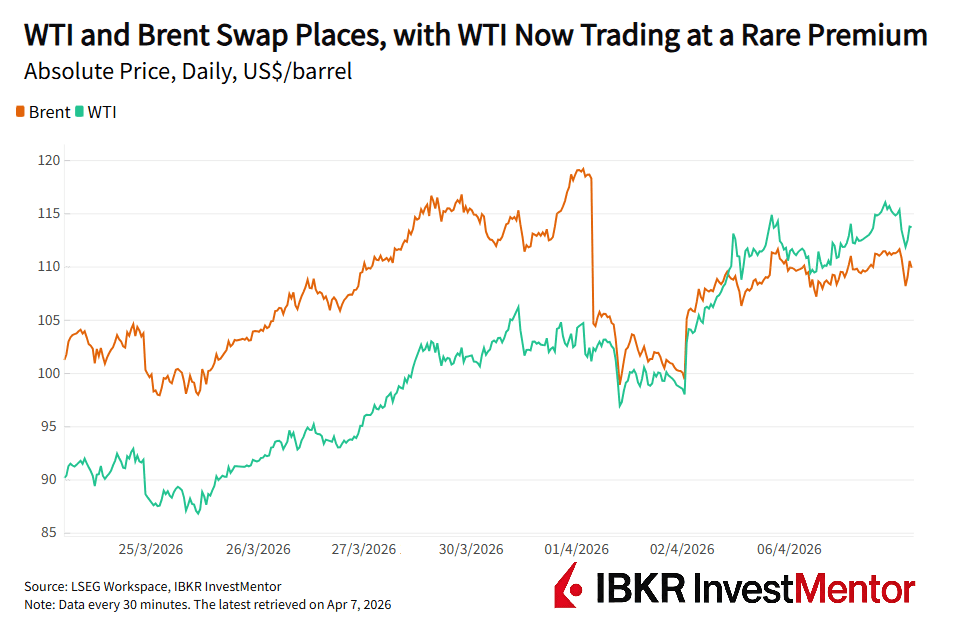
American oil benchmark West Texas Intermediate (WTI) usually trades below Brent. Brent is a global benchmark for seaborne oil, trading globally. WTI is priced inland in the US, at Cushing, Oklahoma, and is largely meant for domestic refining and consumption. This normally limits its reach.
During the first weeks of the Iran war, that old rule held. Brent surged ahead as the Strait of Hormuz closed, and global shipping risks spiked. The spread briefly shot up above $18, with Brent taking the lead.
Now it has flipped. In April, WTI has mostly been trading above Brent. That’s rare, and it signals real stress in the oil market.
A large part of the “WTI premium” comes down to how oil futures work.
Because of the Iran war, oil markets are in extreme backwardation, meaning oil for earlier delivery costs much more than oil for later delivery. WTI just happens to be priced closer to the immediate shortage. And for all we know, the war could be over by June.
Backwardation is the market’s stress signal. When oil is scarce, buyers pay up more for barrels they can get soon.
It’s not unusual for oil markets to be in backwardation, but the pressure is extreme right now. Front‑month WTI (futures contract that is closest to expiration) traded at its largest‑ever premium over the second‑month contract last week. That means oil available today is far more valuable than oil promised later.
Why is this happening? The Strait of Hormuz, a narrow waterway largely controlled by Iran, normally handles about 20% of global oil flows. Its effective shutdown removed a huge chunk of supply from the system.
So, is it all just contract math then? No. In this environment, safe access matters.
WTI barrels are produced inside the US. They move by pipeline, load from the US Gulf Coast ports, and ship without ever coming anywhere near the Strait of Hormuz. That gives them a short‑term security premium.
As a light and sweet crude oil type, WTI is a good replacement for some European and Asian refineries that have lost access to Middle Eastern oil like Abu Dhabi’s Murban crude.
Several things are pushing WTI higher:
When near‑term supply is tight, buyers are willing to pay extra for certainty.
Want to explore more? Download our free app to unlock expert news updates and interactive lessons about the financial world.