Economy
Euro Inflation
Energy Shock Reaches Eurozone Consumers
3/31/20264/1/2026
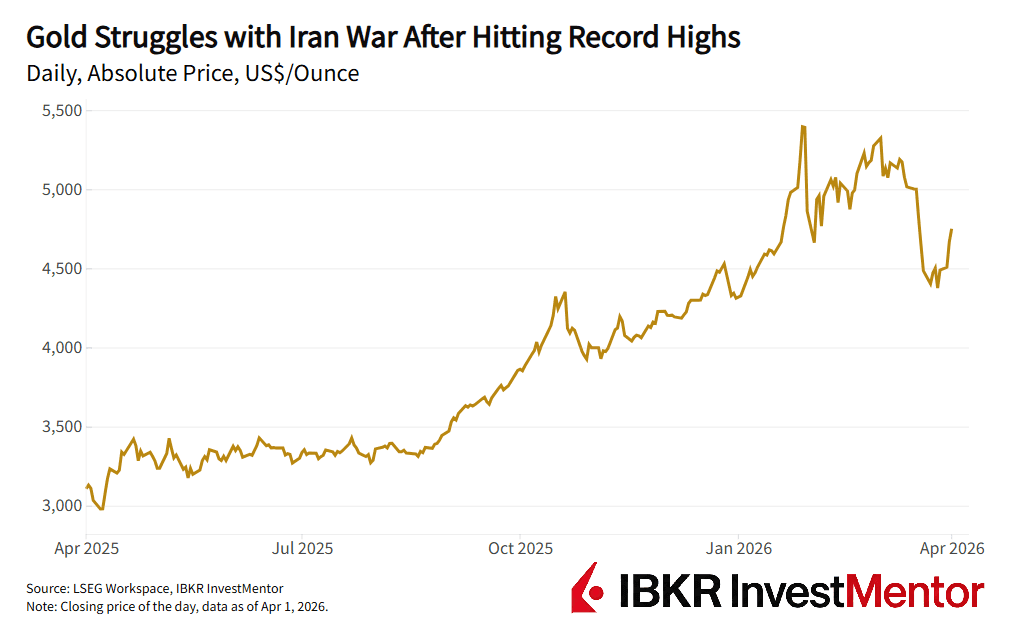
In times of war, investors often turn to gold. During the Iran war, many have done the opposite. Prices fell about 17% after fighting escalated, and March became gold’s worst month in more than 17 years.
Despite clawing back some of the losses in the past two weeks, gold was still trading around 10% lower at the start of April compared to the pre-war level.
Gold is often described as a classic safe‑haven asset, meaning it’s expected to hold its value during general market turbulence. Wars, pandemics, and natural disasters are situations where gold usually shines the brightest. So, what’s going on?
When markets fall sharply, investors rush for cash. Losses in stocks and bonds can trigger margin calls, when traders must post extra money to keep positions open. To raise that cash, they sell assets that are easy to trade.
Gold fit that role. Before the US-Israeli attack on Iran on 28 February, gold was sitting on massive gains. It was one of the best-performing assets in 2025, rising more than 60%, and it topped $5,000 per ounce for the first time in history this January.
There was talk of gold being overvalued and, as the markets lurched, investors were eager to sell it as an easy way to access cash quickly. Gold moved from overbought to oversold territory in a matter of weeks.
Gold pays no interest and comes with storage costs. When bond yields rise, it struggles because investors can earn more income elsewhere. That’s why, traditionally, a rate hike by a central bank is bad for gold.
Over the past couple of years, that link weakened as strong central‑bank gold buying boosted prices, even when yields rose.
But now, higher oil prices have revived global inflation fears, pushing investors to scale back expectations for interest‑rate cuts by the Fed and other major central banks. There’s even talk of rate hikes, and gold is reacting to this. A stronger dollar, which gold is priced in, has added further pressure.
Gold markets are not yet pricing in a global recession or stagflation, meaning slow growth alongside high inflation and unemployment. Those are environments where gold has historically done well. Even if the war ends quickly, energy prices could stay elevated and supply chains disrupted for months.
Long‑term tailwinds that supported the 2025 rally are still there. Central banks’ gold demand remains strong as countries seek to reduce reliance on the US dollar and protect reserves from geopolitical risk. High global debt levels, trade tensions, sanctions, and political uncertainty all support precious metals.
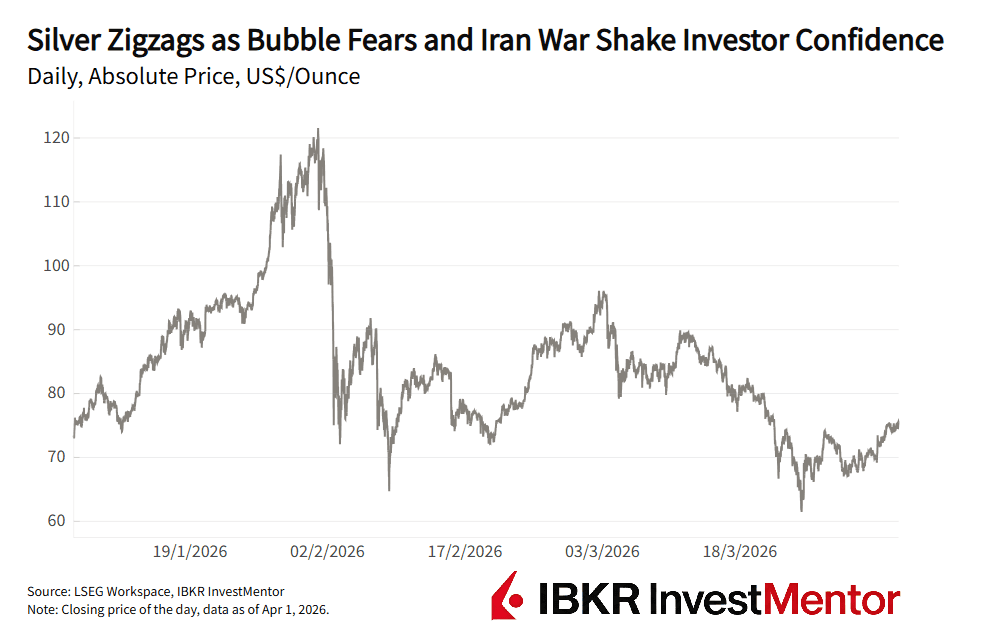
Silver often moves with gold, but with bigger swings. In 2025, it surged 145% in a record-breaking rally, boosted by both strong industrial demand and a speculative frenzy.
Unlike gold, silver has a lot of use cases, including a crucial role in solar panel and electric car production. But the market is much smaller and prone to volatility.
After hitting an all‑time high in late January, silver plunged more than 30% in a single day as investors thought the bubble had peaked. The Iran war led to more whipsawing, with silver now trading nearly 40% below the peak.
Want to explore more? Download our free app to unlock expert news updates and interactive lessons about the financial world.