
Economy
Greenland Rush
Why Greenland Has Become a Strategic Prize
1/7/20261/7/2026

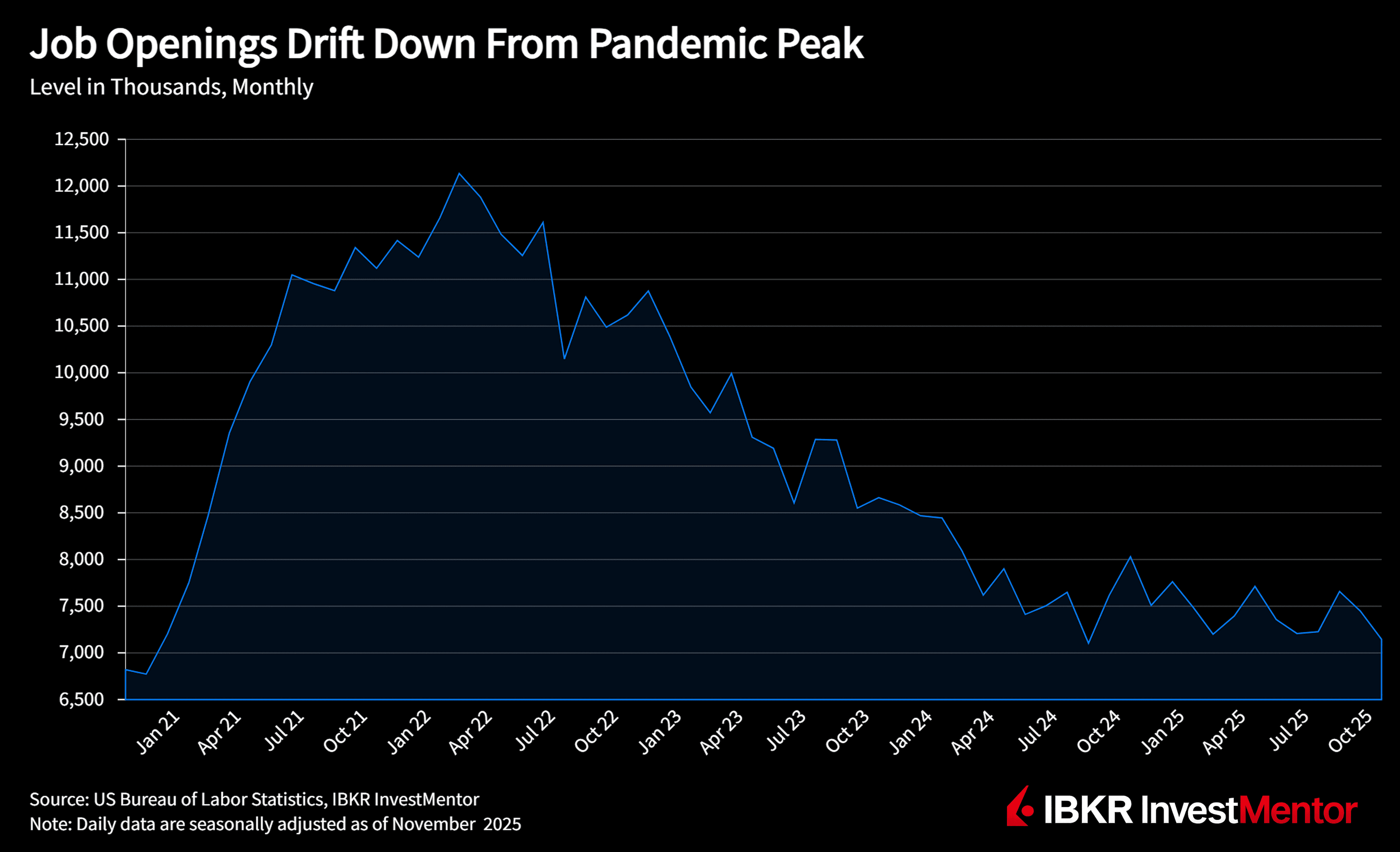
The latest JOLTS report for November 2025 points to a US labor market that’s clearly cooler than a year ago, but still far from stressed. Openings are down over the year, but layoffs remain low and quits are stable, with some pockets of renewed churn in service industries.
Under the surface, there’s a clear sector rotation:
The big picture: demand for workers is off its peak, especially in rate-sensitive and goods-related sectors, but employers are still posting a substantial number of vacancies.
The main movements were on the government side:
That mix suggests hiring is not accelerating, and public sector demand is softening at the margin.
Total separations held steady:
Within that:
The quits rate is often read as a gauge of worker confidence. The aggregate rate is no longer at the “great resignation” highs, but the jump in quits in accommodation and food services shows that in lower-wage, high-turnover sectors, workers still feel able to move or trade up. At the same time, low layoffs and a series low in other separations signal that employers are not yet resorting to broad-based job cuts.
By establishment size, both the smallest firms (1–9 employees) and the largest (5,000+) showed little or no change in openings, hires, and separations rates. The cooling is more about sector mix than a clear size-based pattern.
The BLS also revised October:
Revisions were larger than usual because the statistical alignment procedure was suspended for the preliminary October data, so November gives a cleaner read on where things actually stand.
Taken together, the November JOLTS data describe:
For policymakers and market watchers, this fits a “cooling but not cracking” narrative: demand for labor is easing from very tight levels, which should help relieve wage and inflation pressures over time, but there is no sign yet of a broad-based deterioration in job security.
Want to explore more? Download our free app to unlock expert news updates and interactive lessons about the financial world.