
Tech
Jensen Rebooted
Huang Is Back but Nvidia’s Problems Aren’t Over
11/23/2026
11/25/2026
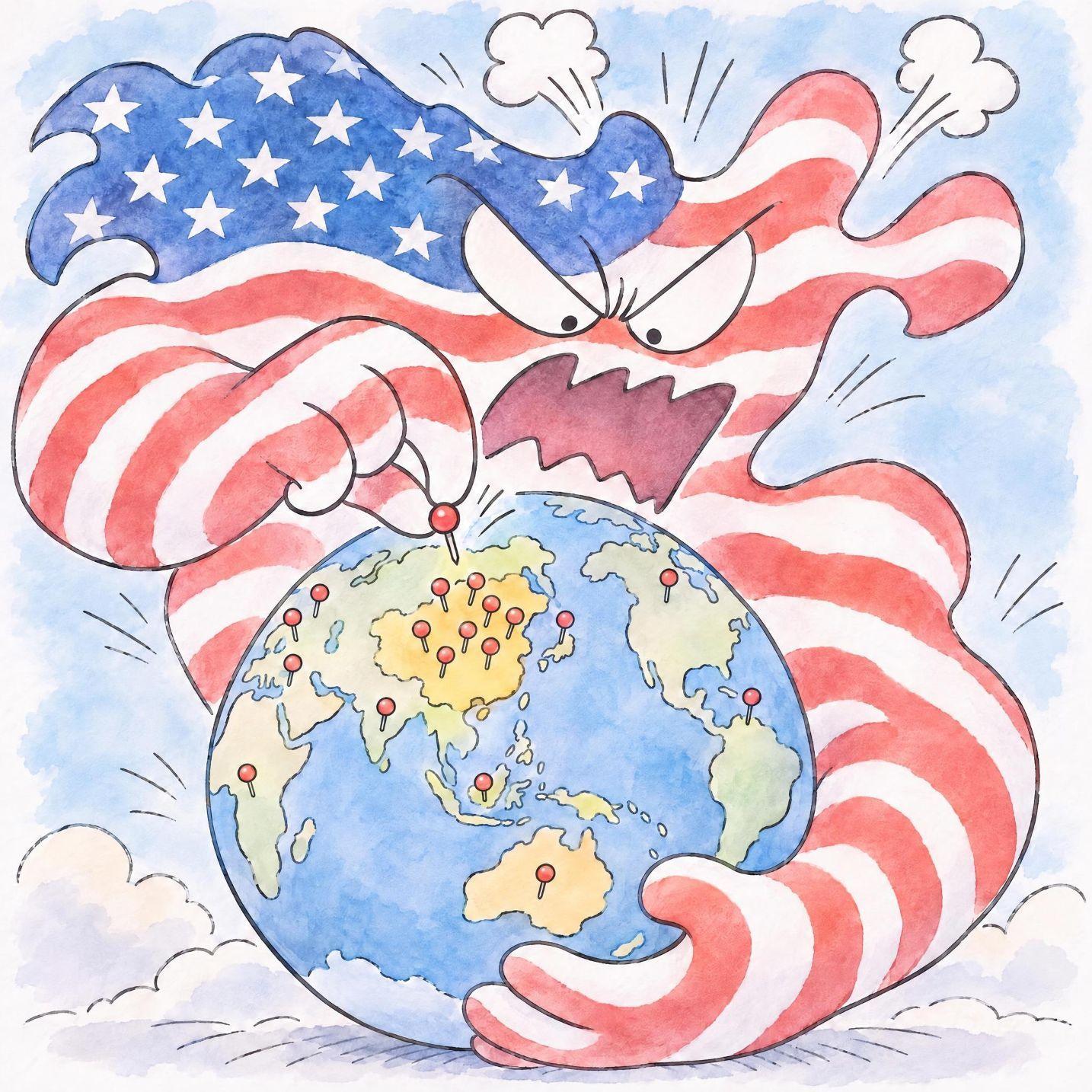
US President Donald Trump is back tinkering with his favorite economic policy tool: tariffs. This time the White House is targeting “excess industrial capacity” of 14 trading partners. The White House claims these countries are flooding the global markets with cheaply produced goods like steel and solar panels and need to pay higher duties because of that.
The US is slapping tariffs as high as 20%, with China and Vietnam facing the highest rate. Some other major trading partners, including the EU, Japan, South Korea, and huge chip exporter Taiwan, face 15%. This further complicates how the US trades with the world:
Lost? You’re not the only one.
Trump’s second term has produced a dizzying sequence of tariffs, retreats, replacements, and new legal justifications.
Some imports, such as steel, aluminum, and cars, have faced higher rates. Bilateral deals and escalations add more complications. At one point in 2025, US slapped 145% duties on all Chinese goods (a move that was soon undone).
This has led some trading partners to find buyers elsewhere. Canada, for example, cut trade barriers with China this month.
Trump’s China policy has become a strange mix of confrontation and camaraderie. The US President met counterpart Xi Jinping in Shenzhen just last week and called the summit “a great and highly consequential trip.” Now his administration is proposing more tariffs, while also negotiating tariff cuts on about $30 billion of bilateral trade.
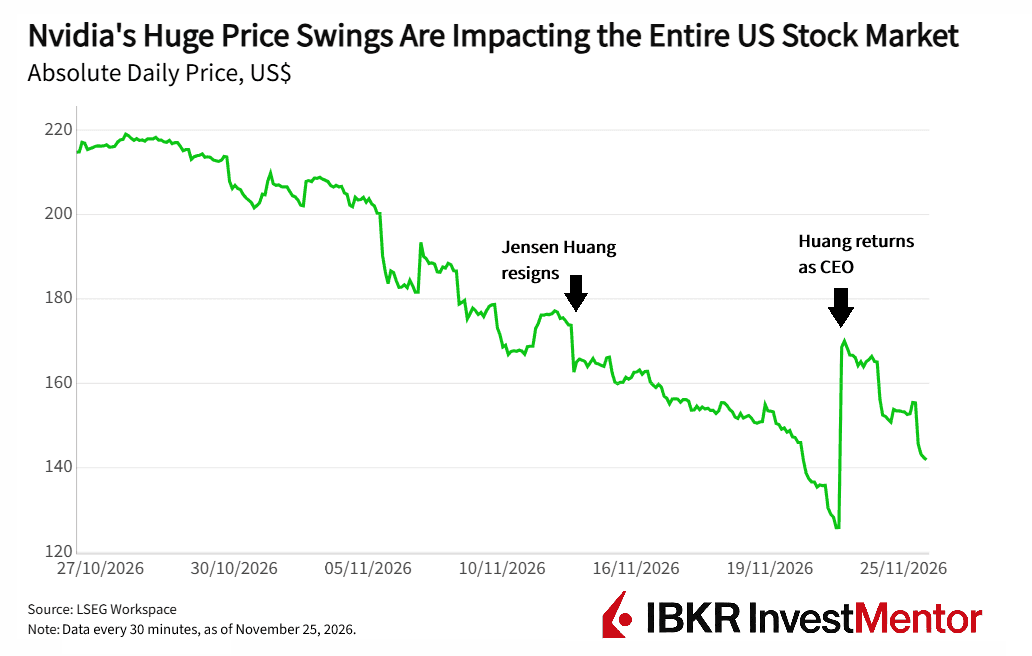
Then there is the American AI chipmaker Nvidia. Trump personally pushed its board to reinstate CEO Jensen Huang after Huang had resigned over an affair with a suspected Chinese spy. The president was reportedly aware of the allegations but chose not to act. Congress is taking a harder line: lawmakers from both parties are pursuing inquiries, and Huang faces congressional questioning in December.
After the scandal, The US decided to close a loophole that let Chinese companies remotely access advanced AI chips through overseas data centers, requiring export licenses for places like Singapore and Malaysia.
The AI boom that powered stocks higher was already losing some of its fizz, with investors questioning lofty tech valuations and the durability of massive AI spending amidst the Nvidia scandal. The new tariffs added to the worries. Higher import costs can hurt company profits or get passed to consumers as higher prices.
Tech-heavy Nasdaq Composite index in the US is firmly in correction, having lost more than 17% since its all-time peak in early October. It even briefly dopped below the 20% threshold, crossing over to bear market.
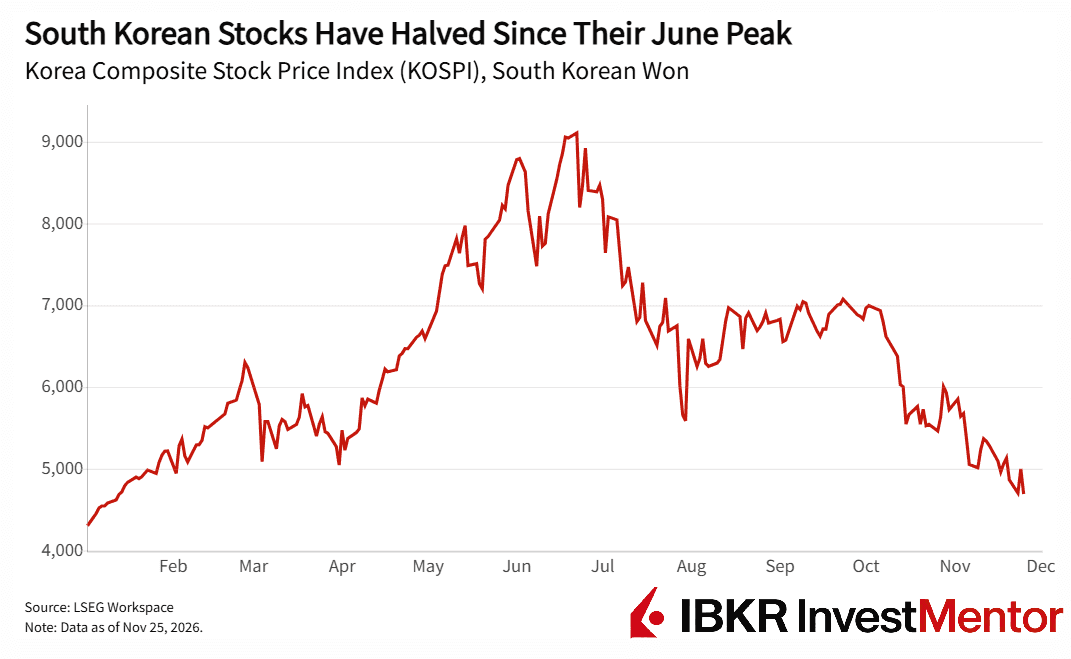
Some Asian markets have been hit much harder, with memory chip-driven South Korean Kospi index trading down nearly 50% from the June record.